Interviews
Adam Lin: Exploring Intimacy, Masculinity and Heritage Through Photography
Adam Lin is a Taiwan-born photographer and visual artist based in London, working across intimacy, masculinity, queerness and heritage, and the points where...
Adam Lin is a Taiwan-born photographer and visual artist based in London, working across intimacy, masculinity, queerness and heritage, and the points where those subjects refuse to separate. He was selected as a grantee through PhotoVogue's East and Southeast Asian Panorama open call, a programme built to recognise photographers whose work sits outside the Western editorial mainstream.
That combination of subjects is not as abstract as it sounds. Photograph somebody you love, or somebody who reminds you of home, and every technical decision becomes a question about how much you are willing to show.
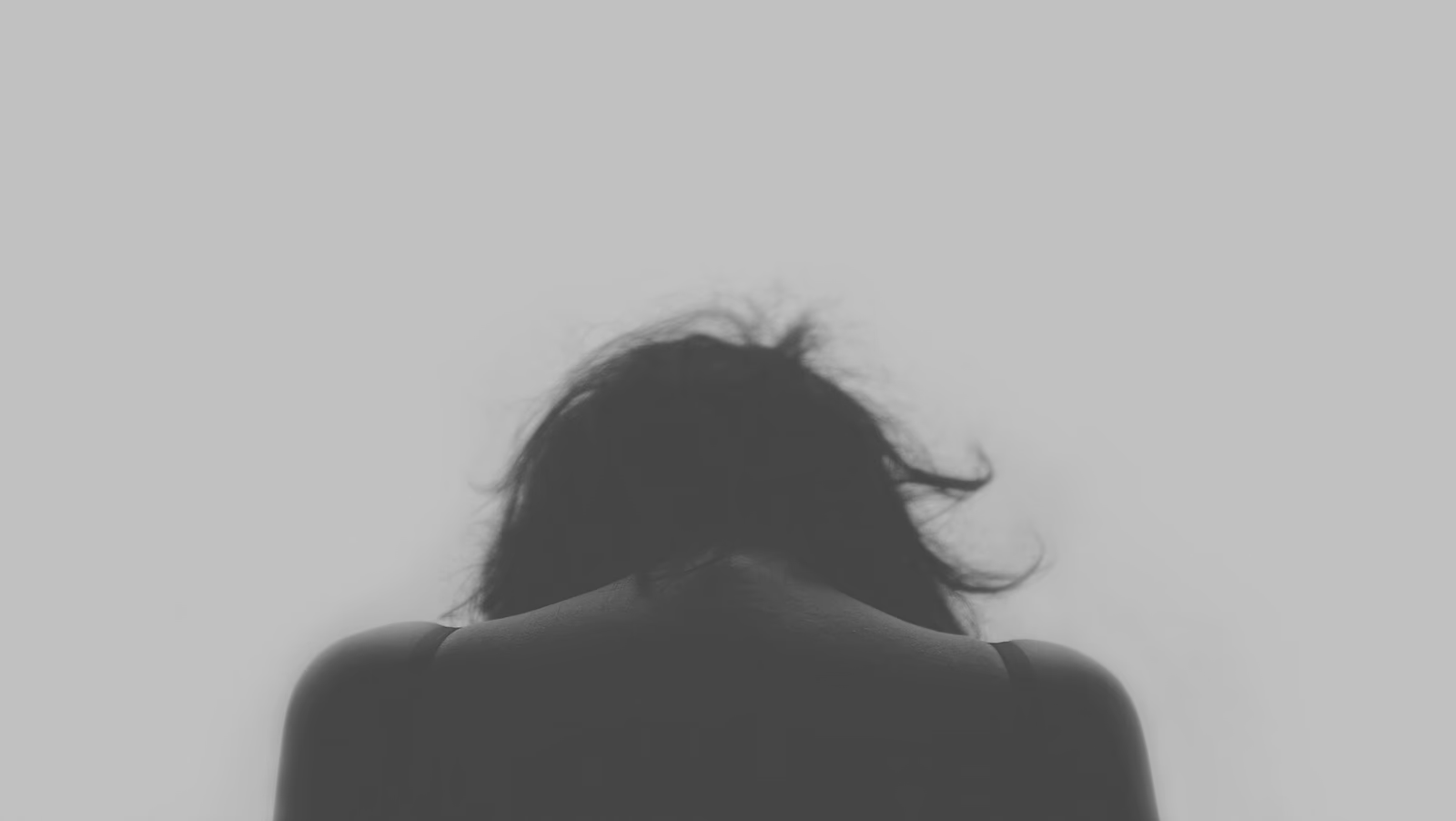
Photo: Monochrome portrait (Unsplash).jpg.jpg) by Volkan Olmez volkanolmez — CC0, via Wikimedia Commons.
Photography as Self-Discovery
Lin came to photography from another visual discipline rather than through it. "I got my first DSLR at 16 and was thrilled by how immediate photography felt compared to painting," he has said, and that word is doing a lot of work.
Painting is slow enough that you have time to revise the intention behind an image. Photography gives you a fraction of a second, which means the decision has to be made before you raise the camera, and whatever you actually feel tends to leak into the frame. That is what makes it useful for the kind of work Lin does: a photograph of a body in a room is a record of a relationship, not only of a subject.
His practice is less about documenting the world as it is and more about exploring the world as he experiences it, layered with memory, desire and inherited culture. Photographers who work this way are not chasing neutrality. They are building an argument about how a particular life looks from the inside.
The Male Form Reimagined
The photographs of men in Lin's work are tender rather than aggressive, vulnerable rather than invulnerable, intimate rather than distant. Men appear as subjects of feeling rather than as objects of power.
That choice is more radical than it first appears, because the default vocabulary for photographing men is still built on hardness: square shoulders, low angles, clenched jaw, hard light. Any photographer who wants to work against that vocabulary has to solve practical problems, not just declare an intention. Softness needs soft light. Vulnerability needs a subject who trusts you enough to be unguarded while a camera is pointed at them. Intimacy needs proximity, and proximity needs consent that is actively given rather than assumed.
The craft implications are worth spelling out, because they apply to any intimate portrait:
- Work at the subject's distance, not yours. If you are close enough to see pores, you have to be close enough that your presence is comfortable. Back off until the body relaxes, then stay there.
- Use window light or a single small source. Directional, low-contrast light removes the heroic shadows that make a portrait read as a monument.
- Photograph gestures rather than poses. A hand on a shoulder, a face turning away, a body curling inwards: the small movements carry meaning that a straight-on stare destroys.
- Photograph with consent you can describe. Tell the subject what kind of images you are making and where they will appear, then honour it. Work of this kind depends on a collaboration that outlasts a single shoot.
Photo: 619 Western 06.jpg by Joe Mabel — CC BY-SA 3.0, via Wikimedia Commons.
Between Cultures
Growing up between Taiwan and London gave Lin a specific sensitivity to questions of belonging, and to the different visual languages cultures use to express themselves.
This is one of the most interesting problems in contemporary photography. A photographer who has moved between places inherits two sets of visual conventions and belongs entirely to neither. The result is often a body of work that feels suspended: familiar objects photographed at a slight angle, intimate scenes with something withheld, colour palettes that do not match the location they were shot in.
The instinct to resolve that tension into something clean and communicable is usually wrong. Work that inhabits the tension tends to be more interesting than work that explains it, because the audience is asked to sit with the same ambiguity the photographer lives with. What looks like a stylistic quirk is often an accurate description of a life.
For photographers working from a similar position, the practical version of this is simple: stop trying to translate your subject for an imagined outside audience. Photograph the details that matter to you and let them carry their own weight.
What a PhotoVogue Grant Signals
PhotoVogue's East and Southeast Asian Panorama open call is part of a wider shift in how photography is selected. Rather than waiting for established gatekeepers to anoint a small number of names, open calls and festivals now put work in front of editors directly, and a grant is less a prize than an introduction.
What that means for photographers is worth understanding practically. An open call is a portfolio decision, not a lottery ticket: the work has to read as a coherent series rather than a collection of unrelated strong images. Judges are looking for a point of view they can describe in a sentence, because that is what an editor needs in order to commission or publish anything.
It also changes what a photographer should build. If selection happens through series rather than singles, then the sensible use of time is to shoot fewer projects more deeply, and to make the connections between images explicit when presenting them.
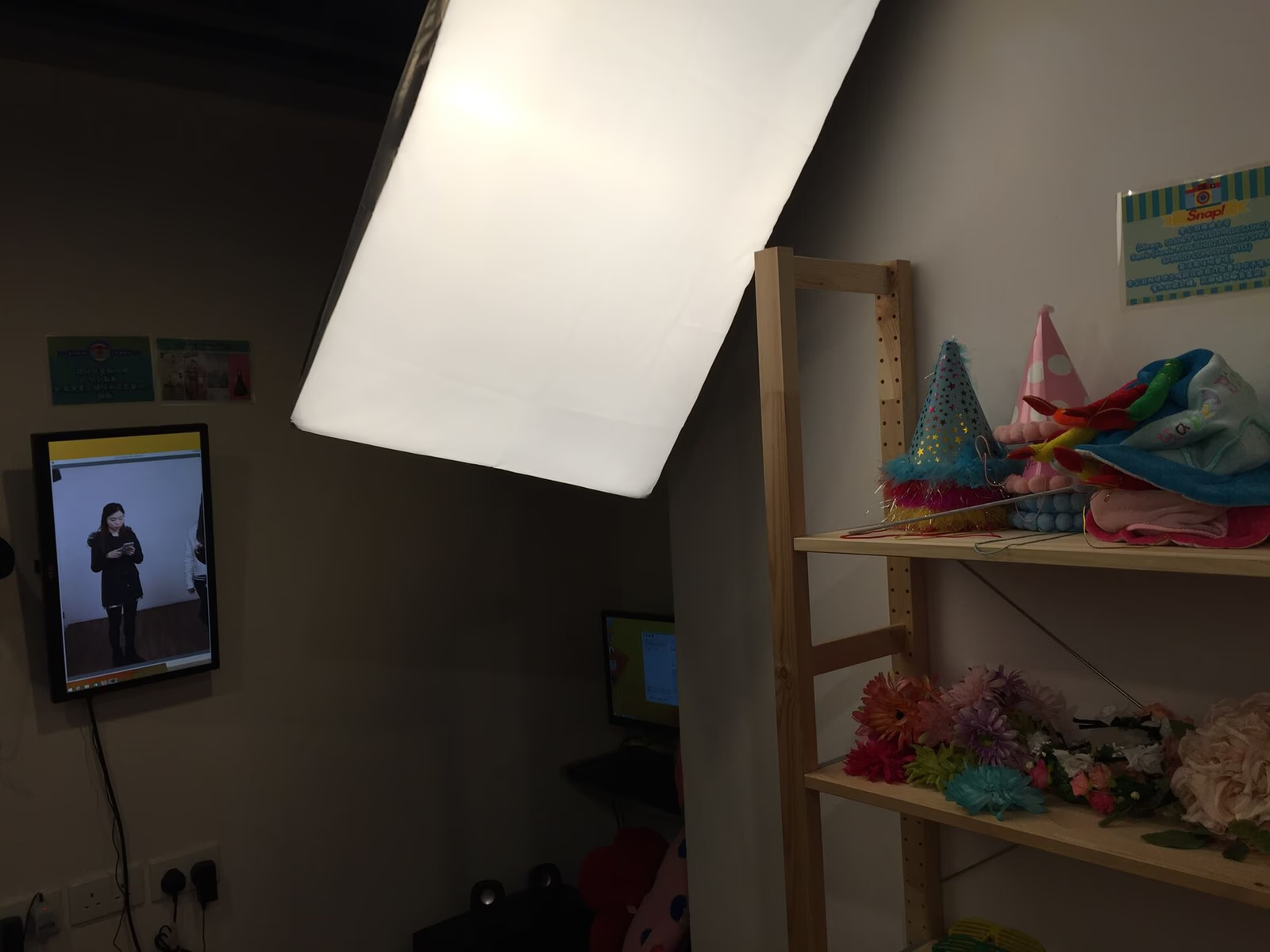
Photo: Lighting in studio.jpg by Burgerkinginsectwater — CC BY-SA 4.0, via Wikimedia Commons.
Building a Body of Work Rather Than a Portfolio
Every photographer eventually hits the same wall: a folder of good images that does not add up to anything. The fix is not more shooting. It is a tighter definition of what the work is about.
Lin's subjects hold together because they are genuinely one question seen from several angles. Intimacy, masculinity, queerness and heritage are not four themes; they are one theme with a long name. A series works the same way. If you cannot say what two images have to do with each other, you have a portfolio rather than a body of work.
The practical test is to lay your best twenty images on a table and remove anything that does not argue with or support its neighbours. What survives is usually a smaller number than expected, and it is usually better.
Practical Tips
- Use photography to explore identity rather than simply document it.
- Challenge the default vocabulary for photographing men: soft light and gestures instead of hard light and poses.
- Work at the subject's distance. Back off until the body relaxes, then hold there.
- Let your experience between cultures inform your visual language rather than trying to translate it for others.
- Treat the immediacy of photography as the point. Decide what you feel before you raise the camera.
- Photograph what feels true rather than what looks impressive.
- Build series, not singles. If two images have nothing to do with each other, one of them is in the wrong folder.
- Ask for consent you can describe out loud, and respect the limits of it.
Further Reading
- one-window portrait lighting setup
- inside a quiet studio practice
- portrait glass for full-frame cameras
Conclusion
Adam Lin's work sits at the intersection of intimacy, masculinity and heritage, and its value is not that it resolves those questions but that it refuses to pretend they are separate ones. A Taiwan-born photographer working in London, selected through PhotoVogue's East and Southeast Asian Panorama, he makes photographs in which the subject's body is a record of a relationship rather than a demonstration of technique.
The transferable lesson is about intention. Cameras make it easy to produce a lot of images and hard to produce a coherent argument. Photographers who work on identity do not succeed because their subject is important; they succeed because they know exactly what they are looking at, and because the person in front of the lens knows it too.
FAQ
What themes does Adam Lin explore in his photography?
Intimacy, masculinity, queerness, heritage, and the experience of existing between cultures. His images challenge traditional representations of the male form, treating men as subjects of feeling rather than objects of power.
How does cultural background influence photographic vision?
It shapes what you notice, how you compose, and which details seem worth photographing. Lin's experience between Taiwan and London gives his work a distinct perspective on belonging, and produces images that sit between visual languages rather than inside one.
What is the PhotoVogue East and Southeast Asian Panorama open call?
It is an open call and grant programme that puts photographers from East and Southeast Asian backgrounds in front of PhotoVogue's editorial network. For photographers, it is less a competition than a route to being seen by people who commission work.
How do you photograph intimacy without it feeling staged?
Work at a distance the subject finds comfortable, use soft directional light, and photograph gestures and in-between moments rather than held poses. Intimacy reads in the body, and a body only relaxes when the person attached to it trusts what is happening.
How do I build a coherent body of work?
Decide what single question your images are asking, then remove anything that does not answer, complicate or support it. Lay your best twenty images side by side and cut the ones that have nothing to do with their neighbours.
Do I need a grant or open call to get my photography seen?
No, but they shorten the distance between a photographer and an editor considerably. The useful preparation is the same either way: build a series with a describable point of view, because that is what anyone commissioning work needs to hear.