Interviews
Companerx: Photography and Trans Rights in Colombia
A PhotoVogue conversation between Camila Fálquez and Willow Defebaugh brought together artistic practice, editorial vision and activist urgency around trans...
A PhotoVogue conversation between Camila Fálquez and Willow Defebaugh brought together artistic practice, editorial vision and activist urgency around trans rights in Colombia. The project they discussed, Companerx, treats photography as something other than documentation: a form of solidarity, a political act, and a way of making visible a community that much of society would rather not see.
The distinction between photographing a community and working with one is the whole argument, and it is a distinction that changes every practical decision in a shoot.
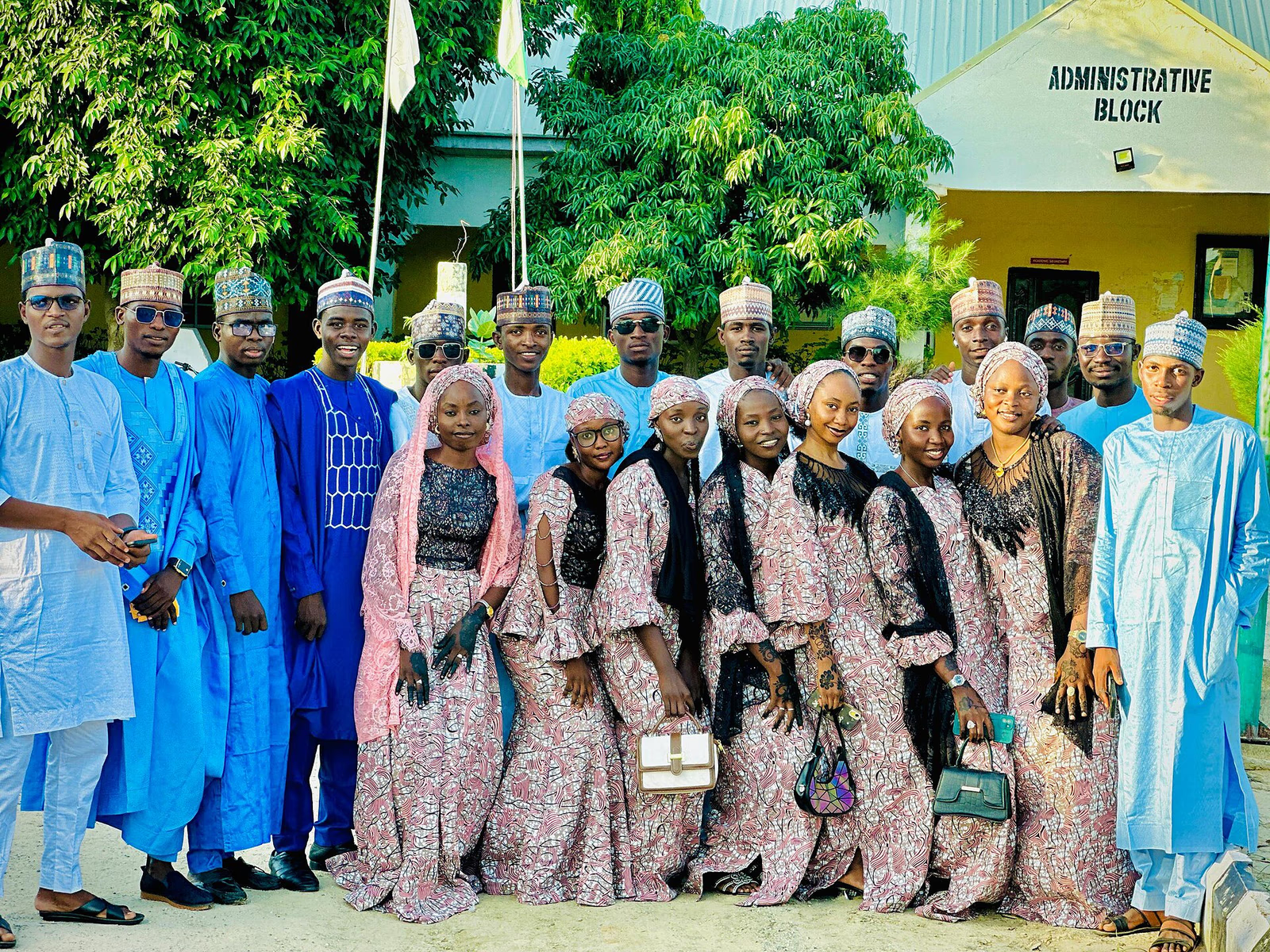
Photo: A group portrait taken outdoors likely at a school or institutional setting.jpg by Hauwasysy — CC BY-SA 4.0, via Wikimedia Commons.
Photography as Solidarity
Companerx approaches photography as a collaborative practice rather than an extractive one. Extractive photography treats people as raw material: the photographer arrives, takes what they need, and leaves with an image that advances their own career. Solidarity photography treats people as partners in the making of the picture, with a say in how they are represented and in what the images are for.
The difference is visible in the results, and viewers notice it even when they cannot articulate why. Collaborative images feel present, dignified and specific. Extractive images feel like illustrations, because the person in them has been reduced to an example of something.
For photographers, this is not only an ethical position but a craft one. A subject who is a partner will give you access, time and honesty. A subject who suspects they are being used will give you a guarded face and nothing else.
Making the Invisible Visible
Trans communities in Colombia face extraordinary violence and discrimination. The monitoring organisations that track this violence consistently place the country among the most dangerous in Latin America for transgender people, in a region that is already the most dangerous in the world for them.
Companerx makes that reality visible, but not through images of suffering. It uses portraits of presence, resilience and joy. That is a strategic choice as much as an aesthetic one, and it is worth understanding: an image of a person in pain invites pity, while an image of a person living their life makes a claim about what they are entitled to. Documenting joy can be as politically effective as documenting pain, and it is considerably harder to dismiss.
The legal picture in Colombia adds a further complication that outsiders usually miss. The country has allowed transgender people to change the gender marker on their identity documents by self-declaration since 2015, one of the earlier countries in the region to do so. Legal recognition and routine violence coexist, and photography that only depicts one half of that contradiction is telling half a story.

Photo: Emma - Natural Light.jpg by Lies Thru a Lens — CC BY 2.0, via Wikimedia Commons.
Working With a Community Rather Than Photographing It
The practical version of solidarity is a set of working habits, and none of them are complicated.
Be invited, or earn your way in. Fálquez's project exists because the community is inside it. A photographer approaching a marginalised group from outside needs a reason to be there that the group agrees with, and it usually takes the form of a long relationship rather than a single request.
Let people decide how they appear. Name, gender expression, clothing, whether a face is shown, whether a location is identifiable. All of those are the subject's decisions, and a photographer who treats them as compositional ones is choosing their own convenience over someone's safety.
Show the work before it is published. Give people the chance to see and object. Fewer images survive that stage, and the ones that do are stronger.
Pay people, or share the proceeds. If the photographs will earn money or attention, the community should benefit from them. This is basic, and it is still rare.
Do not flatten a community into a single image. One portrait represents one person. Series work is the minimum for representing a group honestly.
Keep the story ongoing. The most common failure in socially engaged photography is a project that ends when the photographer's interest or funding ends. If the relationship is real, the work continues whether or not anyone is publishing it.
Photo: Manhattan New York City 2009 PD 20091129 009.JPG by Sterilgutassistentin — CC BY-SA 3.0, via Wikimedia Commons.
Why Collaborative Practice Produces Better Photographs
It is tempting to file solidarity photography under ethics, as a constraint on the work. In practice it is a technique, and it produces images that are harder to make any other way.
Access is the obvious benefit. A community that trusts a photographer opens doors that no amount of planning will open, and they also tell you where not to go, which prevents work that is inaccurate as well as intrusive. Then there is honesty: people who are collaborators perform less, and photographs of people who are not performing carry information that posed pictures cannot.
The final advantage is durability. Extractively made work dates quickly, because the style and the assumptions date with it. Collaborative work tends to survive, because it is a record of a relationship rather than a record of a photographer's assumptions.
Practical Tips
- Approach photography as solidarity rather than extraction.
- Collaborate with communities instead of arriving as an outsider with a camera.
- Let subjects decide how they are represented, including what identifies them.
- Document joy and resilience alongside struggle. Both are political.
- Be specific about what the images are for and where they will appear.
- Show the work to the people in it before publishing.
- Pay people, or share what the project earns.
- Build relationships that outlast the project, and treat the project as ongoing rather than finished.
Further Reading
Conclusion
Companerx is a useful example of what photography looks like when the people in the frame are treated as participants rather than subjects. Fálquez's work in Colombia, discussed with Defebaugh in the PhotoVogue conversation, demonstrates that images can serve a political purpose without becoming propaganda: they document presence and joy as well as violence, and they are made with the community rather than about it.
For photographers at any level, the transferable rule is narrower than it sounds. Decide who the photographs are for and what the people in them get out of it. The answer determines how you work, and how you work determines what the pictures are worth.
FAQ
What does it mean for photography to be an act of solidarity?
It means working with communities as partners rather than photographing them as subjects. The people in the work define how they want to be represented, and the photographer uses their platform to amplify those representations instead of speaking on someone else's behalf.
How can photography support social justice movements?
By making visible what society would prefer to ignore, and by documenting joy and resilience as well as struggle. Photography provides evidence that people exist, matter and deserve dignity, which is why collaborative images tend to carry more weight than images taken from outside.
What is at stake for trans people in Colombia?
Extraordinary levels of violence and discrimination, in a region where trans people face the highest recorded rates in the world. Colombia has recognised gender self-declaration on identity documents since 2015, which means legal recognition and routine violence exist side by side rather than one replacing the other.
How should a photographer approach a community they are not part of?
Be invited, or take the time to earn the relationship, and accept that it takes longer than a single shoot. Let people decide how they appear, show them the work before it is published, and be clear about what the images will be used for.
Should socially engaged photography focus on suffering?
Not only. Images of pain invite pity, while images of ordinary life make a claim about what people are entitled to. Documenting resilience and joy is often more politically effective, and it resists being dismissed as victim imagery.
What is the most common mistake in documentary work about marginalised groups?
Leaving. A project that ends when the funding or the photographer's attention ends confirms that the subjects were a means to an end. The work holds up when the relationship outlasts the publication.