Interviews
50 Lessons From Vogue Photography: A Master Collection
Fifty articles of Vogue photography coverage, taken together, produce a surprisingly consistent set of instructions. They range from Instagram craft and back...
Fifty articles of Vogue photography coverage, taken together, produce a surprisingly consistent set of instructions. They range from Instagram craft and backstage access to interviews with photographers who have worked for four decades, and the disagreements between them are far smaller than the overlaps.
What follows is the distilled version: fifty lessons, grouped so they can be used rather than admired.
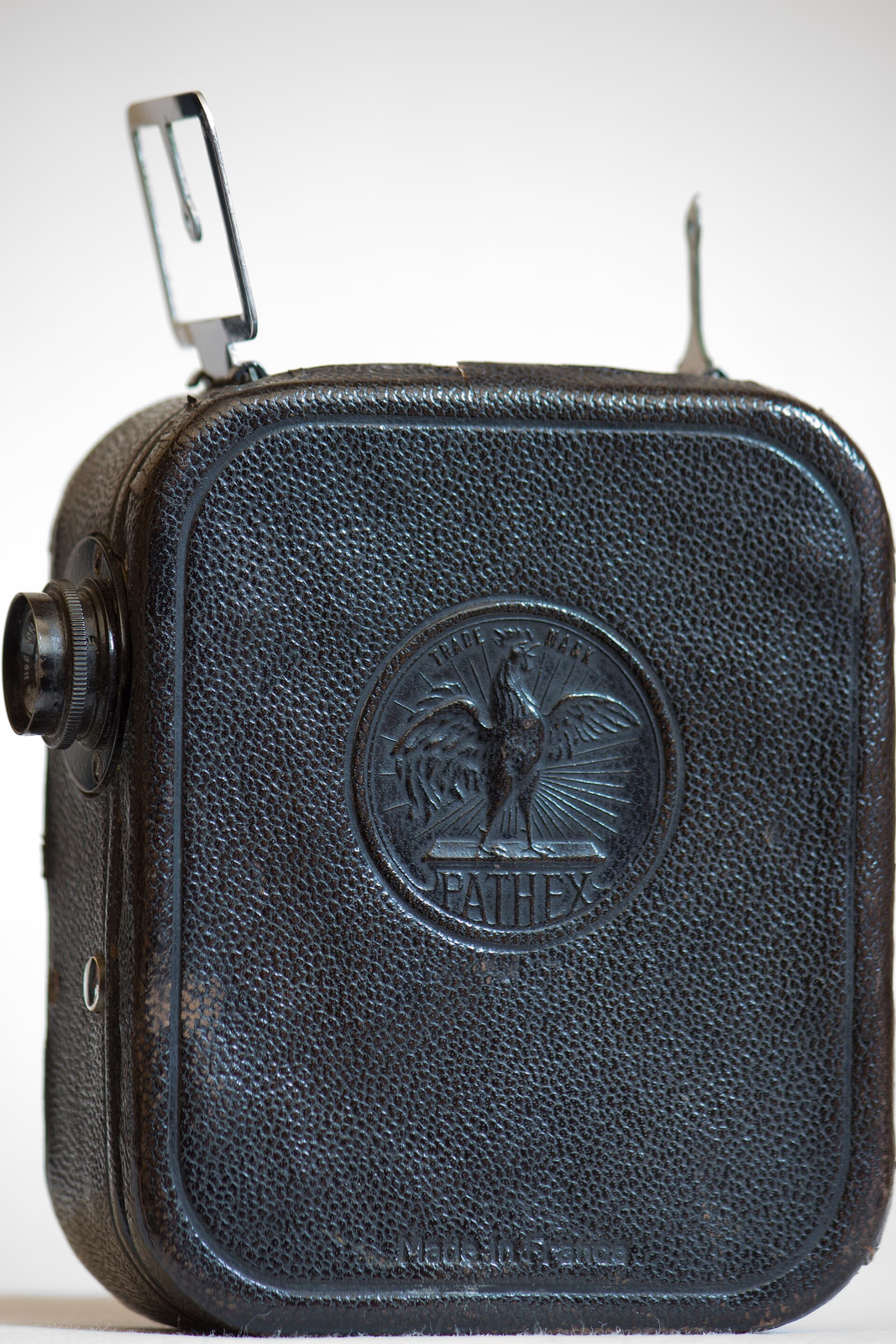
Photo: Pathé-Baby hand movie camera (left).jpg.jpg) by Cquoi — CC BY-SA 3.0, via Wikimedia Commons.
On Light
- Look at the light before the subject. Subjects are everywhere; good light is not. Decide what the light is doing, then find something worth putting in it.
- Simpler light is almost always better. Window light, the last hour of sun, and a single carefully placed source beat an elaborate setup you cannot control.
- Side light reveals texture. It carves shape out of a surface; front light flattens everything it touches.
- Shadow edges tell you about the source. Crisp edges mean a small source and high contrast; soft edges mean a large one.
- Overcast weather is a softbox the size of a city. Photographers cancel sessions in light that portrait photographers should be hoping for.
- Shoot the edges of the day for dimension. Midday sun removes depth from faces and landscapes alike.
- Learn to describe light in four words. Direction, quality, colour, and how long it will last. That vocabulary does more than any new lens.
- Light is time-sensitive. Most good photographs exist for a few minutes, which is why arriving early is a technical decision.
On Trust and People
- Trust is built before the camera comes out. Ten minutes of conversation changes every frame that follows.
- Learn names. It is the smallest thing you can do and it is visible in the photographs.
- Explain what the pictures are for. Subjects who know where an image will appear behave differently, and better.
- Direction is a service, not a demand. A subject who follows your instruction is trusting your view of them.
- Collaborators perform less. Treat people as participants rather than subjects and their faces relax.
- Photograph people as they want to be seen, then add your idea. Both halves matter; only one of them is about you.
- Never publish the frame that embarrasses someone who trusted you. One viral image costs you the room for good.
- Two minutes of conversation outperforms two hours of retouching. Almost every stiff portrait failed before the shutter opened.
On Vision and Voice
- Anyone can buy your camera. Nobody can buy your eye. Technique is a commodity; judgement is not.
- Find what repeats in your archive. The subjects and light you keep returning to are the beginning of a voice.
- Shoot series, not singles. A body of work argues; a folder of good photographs only decorates.
- If you cannot describe your work in a sentence, an editor cannot either. Clarity is a professional skill.
- Study photographers you admire, then stop imitating them. Influence is a starting point, not a destination.
- Bring in something from outside photography. Film, painting, architecture and music all supply visual ideas that photography does not.
- Constraints create style. One lens, one subject, one light source: limitation forces decisions that habit avoids.
- Review your own work honestly. Volume without comparison produces experience without improvement.
On Craft and Constraints
- Editing is craft, not decoration. Open the shadows, add a little contrast, pull the highlights down, stop.
- Restraint ages better than heavy filters. Aggressive grading dates an image to a particular year.
- Shoot fewer, better frames. Holding the shutter down produces a week of deletion and no improvement.
- Shoot vertical frames natively. Cropping horizontals into social formats loses composition that was never designed for it.
- Blur your eyes before you press the shutter. Two seconds of defocus reveals balance, clutter, and posts growing out of heads.
- Straighten your verticals. Converging walls read as carelessness regardless of what else is right about the image.
- Frame within a frame. Doorways, windows and arches give context and concentrate attention without a longer lens.
- Print your work. Scale, paper and texture change what a photograph communicates, and screens hide the difference.
On Gear and Technical Choices
- The best camera is the one you have with you. The photograph you took on a phone beats the one you missed with a better camera.
- Buy gear when it solves a problem you actually have. Otherwise you are buying a feeling.
- A discreet camera changes how people behave. Small bodies keep scenes natural; large ones turn subjects into performers.
- Carry backups. A second body, spare cards, spare batteries. On a shoot with no retakes, failure is avoidable.
- Know your settings well enough to improvise. When conditions shift, you want one adjustment, not five.
- Light is worth more than resolution. Nobody has ever admired a sharp photograph of nothing.
Photo: 127 Film-1950s era negatives in envelope packaging.jpg by Myotus — CC0, via Wikimedia Commons.
On Beauty and Representation
- Beauty standards are political, not natural. They are shaped by commerce and by who has been photographed often enough to feel normal.
- Light every subject as if they were the point of the photograph. The technical treatment is the editorial claim.
- Learn to photograph a wider range of skin tones properly. This is a skill with specific technical answers, not a matter of good intentions.
- Do not retouch away what makes a face specific. Smoothing and tidying remove the evidence that a real person was in the frame.
- Show systems, not symbols. Places become clichés when photographed for what they represent rather than how they work.
- Representation is a technical skill before it is an ethical one. Intent does not compensate for incorrect exposure and colour.
On Career and Community
- Access is earned over years. It is built on reliability, discretion and not creating problems for the people who let you in.
- Build a portfolio of the work you want. Showing only paid work means only ever being offered what you have already done.
- Sequence your portfolio. Order creates meaning, and the weakest image sets the impression.
- Rejection is a permanent feature, not a verdict. The photographers who last are the ones who kept working after the interesting part ended.
- Community is the mechanism of progress. Find five people who will look at your work properly and meet on a schedule.
- Start now, with what you have. Conditions do not improve on their own, and the equipment you already own is enough to make the first serious pictures.
Photo: Deutsches Historisches Museum, Berlin-Mitte, 170128, ako.jpg by Ansgar Koreng — CC BY-SA 3.0 de, via Wikimedia Commons.
The Six Rules That Repeat
Every one of the fifty lessons above collapses into one of six instructions, and they are worth memorising in this order:
- Light before subject. Always.
- Trust before technique. Always.
- Vision before gear. Always.
- Constraints before freedom. Usually.
- Restraint before spectacle. Almost always.
- Community before isolation. Always.
Further Reading
- Annie Leibovitz on five formative images
- a fashion photographer on creativity
- one-window portrait lighting setup
Conclusion
Fifty articles and fifty perspectives arrive at the same place: photography is not primarily a matter of cameras. It is a practice of seeing, of earning the cooperation of the people in front of you, and of making decisions with a clarity that no piece of equipment can supply.
The useful thing about having fifty lessons rather than one is that they can be worked on separately. Pick the two you are worst at this year, ignore the rest, and come back to the list when they have stopped being problems. That is how the photographers whose work lasts actually improved: not by understanding everything at once, but by fixing one decision at a time.
FAQ
What is the single most important lesson across these fifty articles?
Light before subject. It is the instruction that appears most consistently across genres, decades and photographers, and it is also the one that most photographers skip when they are in a hurry to photograph something.
What do the best photographers have in common?
They invest in relationships. Subjects, collaborators, the people who commission and publish them: the work endures because the trust behind it did, and because the photographs were made as collaborations rather than extractions.
What is the best advice for a beginner photographer?
Start now with whatever camera you have, shoot constantly, study light obsessively, and find people who will look at your work honestly. Do not wait for better gear or ideal conditions, because neither arrives on its own.
Which lessons matter most for a professional career?
Access built over years, a portfolio of the work you want to be hired for, and negotiating usage rights. The craft lessons improve your images; those three determine whether anyone sees them.
How should I use a list like this?
Pick two lessons you are worst at and work on those for a year. Trying to apply all fifty at once produces paralysis, and most of them only make sense once the earlier ones are habits.
Do these lessons apply outside fashion photography?
Yes. Fashion work simply makes the constraints visible: limited time, changing light, subjects who are not professionals, and clients with opinions. The same principles govern documentary, portrait, wedding and news photography, with different schedules.