Interviews
Madagascar's Burgeoning Creative Scene: Kevin Ramarohetra
Kevin Ramarohetra, 30, trained as an architect before he picked up a camera. A photography workshop was the turning point, and it gave him a medium that woul...
Kevin Ramarohetra, 30, trained as an architect before he picked up a camera. A photography workshop was the turning point, and it gave him a medium that would let him look at his own country, Madagascar, with different eyes. He belongs to a generation of Malagasy artists using photography to document, celebrate and reimagine what the island's identity actually looks like.
His path is common among photographers who arrive from elsewhere, and it explains why the work looks the way it does: the composition is deliberate in a way that camera-first photographers often take years to reach.
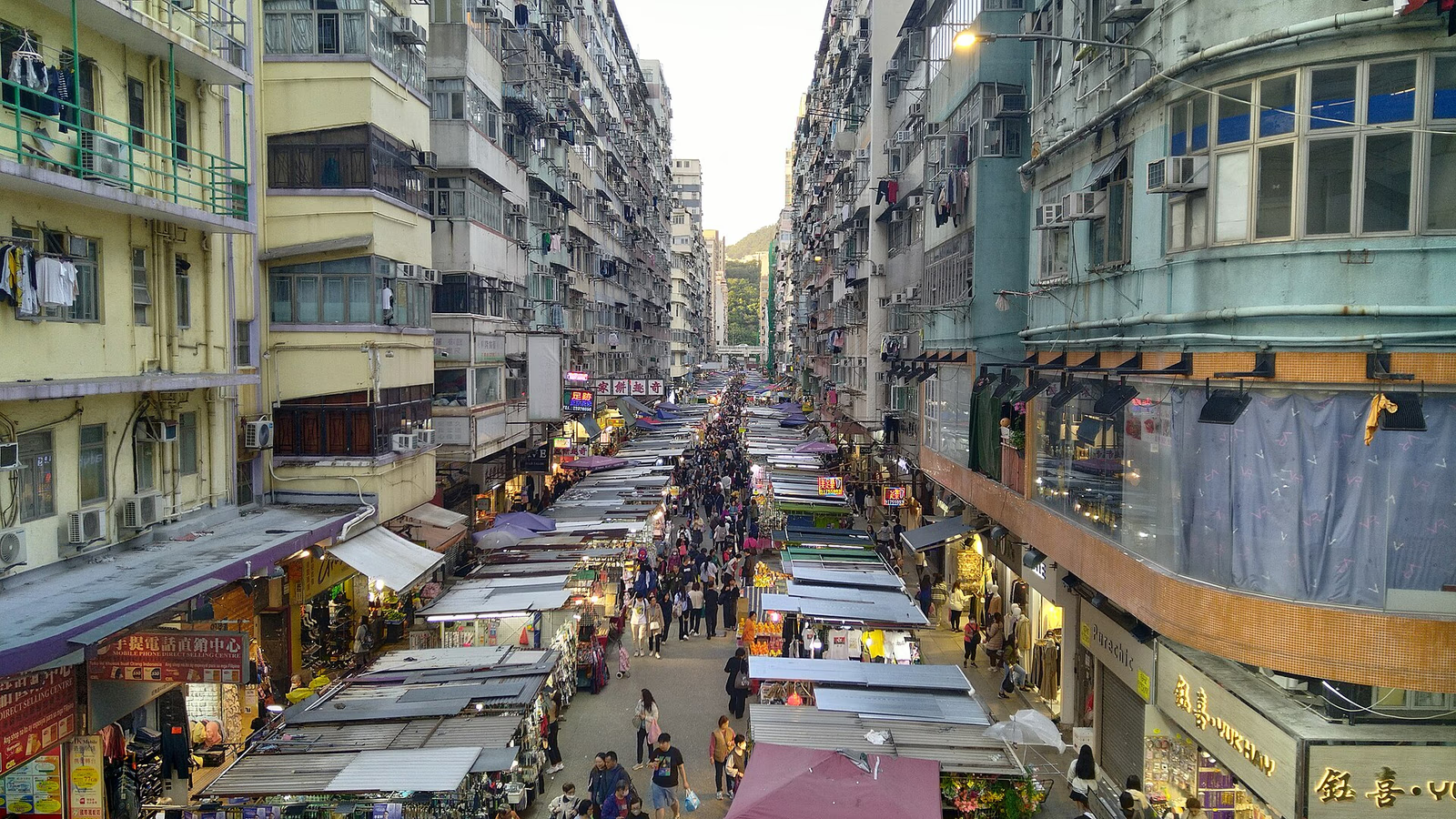
Photo: 202311 Market stalls in Fa Yuen Street, Mong Kok.jpg by Jonashtand — CC BY-SA 4.0, via Wikimedia Commons.
From Architecture to Photography
Ramarohetra's architectural training shows in the photographs. There is a structural rigour to the images, an attention to line, form and the relationship between a subject and the space holding them, which comes from years spent thinking about how people move through buildings.
That is not a coincidence. Architects are trained to work with a set of constraints that photographers share: a frame, a proportion, a viewing position, and a hierarchy of what matters. A building is judged by how it feels from inside, not just how it looks on an elevation, and a photograph is judged the same way.
His example is encouraging for anyone arriving at photography from a different discipline. Previous training is not a delay to be overcome. It is the thing that determines what you notice, and what you notice is the hardest part of photography to teach.
What Architectural Training Gives a Photographer
Three habits transfer directly, and they are worth practising deliberately if you did not come through architecture.
Reading structure before subject. Architects see the organising geometry of a space first: where the verticals are, where the light comes from, where the eye is carried. Applied to a photograph, this means evaluating the setting before deciding where the person stands. Find the frame that already works, then place the subject in it. That single order of operations improves more photographs than any camera upgrade.
Thinking in terms of negative space. A building is partly defined by what surrounds it. Photographers who internalise this stop filling the frame with detail and start using empty areas as weighted elements. A blank wall, an expanse of sky or an empty street is not wasted space; it is what makes the occupied part legible.
Working with scale. Architecture gets its meaning from the relationship between the human body and a structure. Photography does the same thing. Including a person in a large scene tells the viewer how big the scene is, which is why an empty landscape so often feels abstract while the same view with a single figure walking through it becomes a photograph about scale and place.
Documenting a Country in Transition
Madagascar is the world's fourth-largest island, a Malagasy-speaking country off the southeast coast of Africa with an enormous share of species found nowhere else on earth, and a history that includes French colonial rule and independence in 1960. It is also, in most Western coverage, represented through a very small number of images: poverty, deforestation, and political crisis.
Ramarohetra's work offers something else: a Madagascar of creativity, dignity and everyday beauty, with tradition and modernity sitting side by side rather than one being replaced by the other. A new building beside an old one. A ceremony being photographed for family abroad. A workshop full of people learning to use cameras.
That is a harder body of work to make than it sounds, because the alternative images are already in circulation and viewers bring expectations with them. The task is not to contradict those expectations but to render them irrelevant by showing more of the picture than they contain.
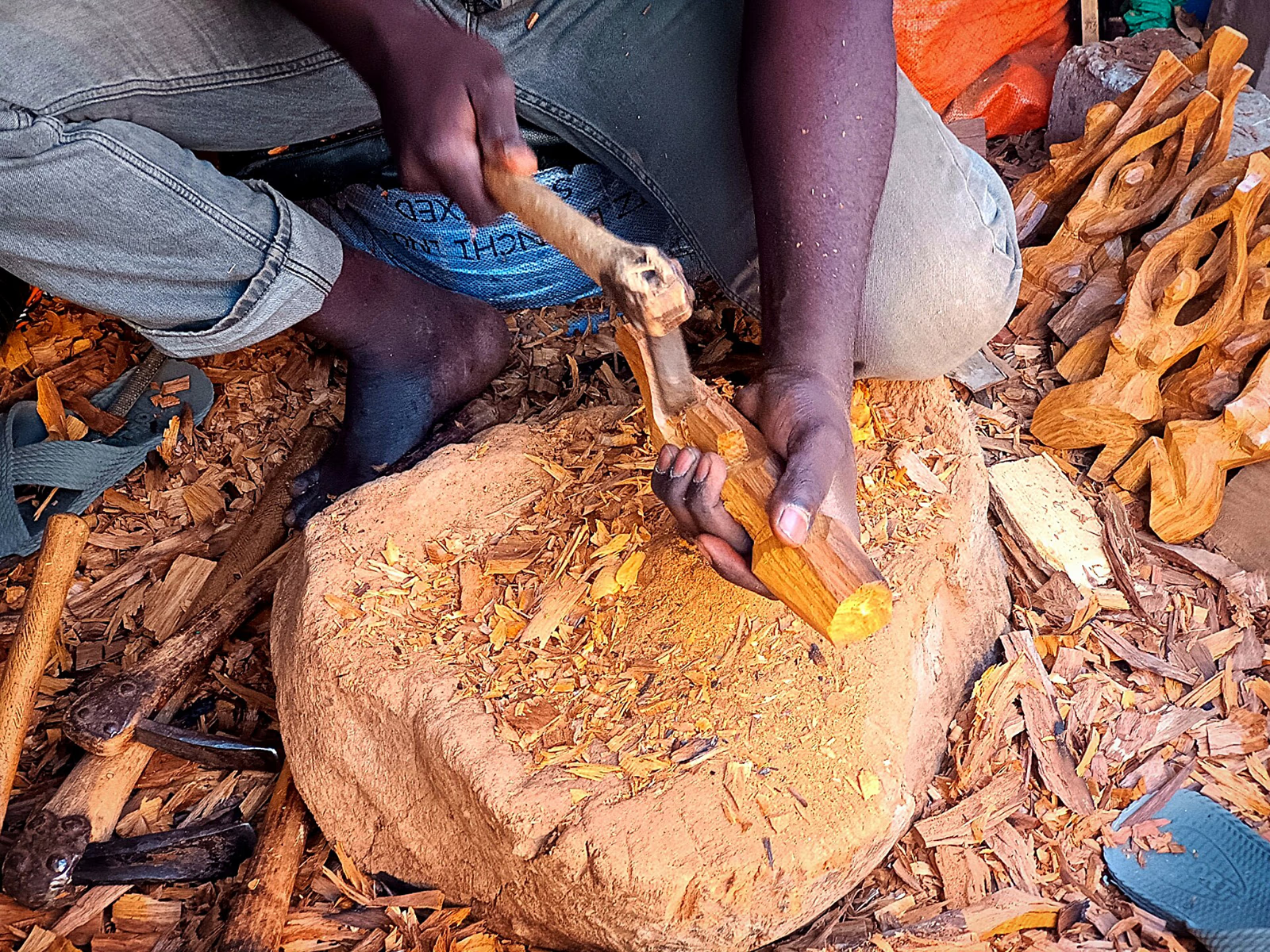
Photo: African artisan carving women shaped statuettes.jpg by Wuzyprod — CC BY-SA 4.0, via Wikimedia Commons.
Photographing Your Own Place Without Repeating Stereotypes
Working from the inside is an advantage, but it is not automatic. Photographers who live in a place can still reproduce the frames that outsiders have already made, because those images are the ones they have seen.
Photograph what you actually see, not what you have seen photographed. Before travelling somewhere, list the images you already expect. Then deliberately look for what is not on the list, because that is where your pictures live.
Show systems, not symbols. A market photographed as a symbol of somewhere exotic is a cliché. The same market photographed as a working system, with supply chains, regular customers, humour and tedium visible, is a document.
Include the middle of life. Poverty and celebration both get photographed, and the vast ordinary middle is mostly skipped: commutes, paperwork, repairs, waiting. That middle is what a place actually consists of.
Credit the people in the frame. Learn names. Publish them where appropriate. A photograph with a name attached resists being used as a generic example of a country.
Be specific about time and place. A caption that names a street and a year does more for the truth of an image than any style choice.
A Creative Scene, Not a Single Artist
Ramarohetra's work belongs to something larger: a wave of creative practitioners in Madagascar who came up through workshops, collectives and online networks rather than institutions, and who photograph the island for audiences inside it as much as outside.
That structural difference is worth noticing, because it changes the work. Photographers who answer primarily to a local audience make different pictures: more specific references, fewer explanations, a greater willingness to record things that outsiders would not consider interesting. The best of it travels anyway.
For photographers anywhere, the lesson is about who you are shooting for. If the imagined audience is always somewhere else, the work drifts towards explanation and loses the texture that made it worth making. If the audience is people who already know the place, you can assume context and spend the frame on detail.
Composition Lessons You Can Borrow From Architecture
- Find the frame first. Locate the structure that organises the scene, then place your subject inside it.
- Straighten the verticals. Nothing signals carelessness faster than converging walls. Correct vertical distortion for interiors and building facades.
- Use reflections and doubles. Windows, water and polished surfaces extend the space in a way flat scenes cannot.
- Frame within a frame. Doorways, arches and windows give a subject context and concentrate attention without a longer lens.
- Shoot the transition space. Corridors, stairs and thresholds are where architecture and human behaviour are most visible.
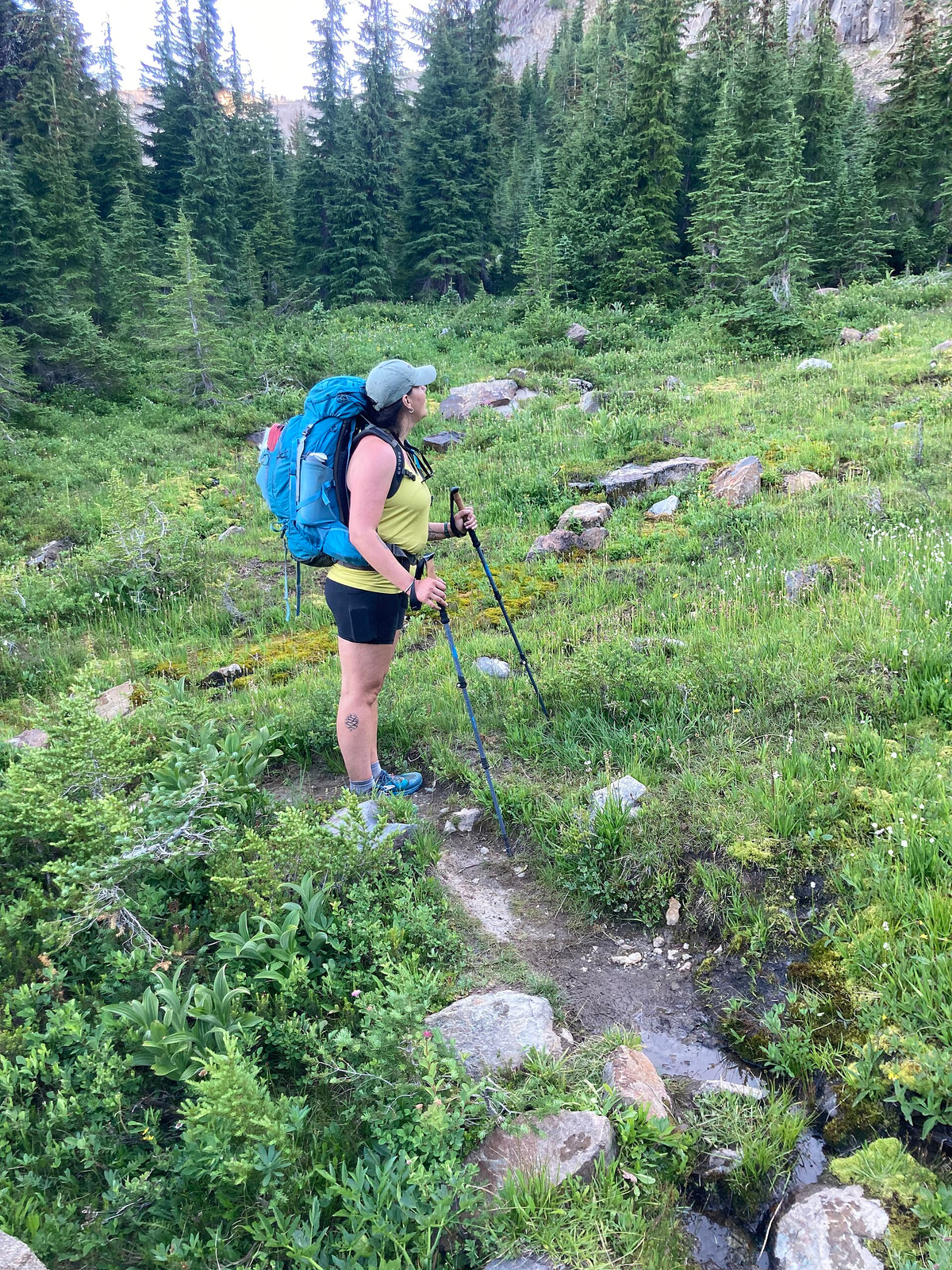
Photo: Backpacker takes in landscape in Goat Rocks Wilderness.jpg by Mattsjc — CC BY 4.0, via Wikimedia Commons.
Practical Tips
- Previous training in any field informs your photographic vision. Lean into it rather than ignoring it.
- Evaluate the setting before placing the subject. Find the frame, then fill it.
- Use negative space deliberately. Emptiness gives the subject weight.
- Photograph your own country or community from within, and credit the people in the frame.
- Challenge stereotypical representations by showing systems and ordinary life, not symbols.
- Study composition through architecture: line, form, scale and threshold space.
- Assume context if your audience knows the place, and spend the frame on specifics instead of explanations.
- Treat workshops and collectives as legitimate entry points into a photographic career.
Further Reading
- photographing place rather than subject
- inside a quiet studio practice
- how to choose your first prime lens
Conclusion
Kevin Ramarohetra arrived at photography with an architect's eye and used it to photograph Madagascar from the inside: not as an environmental crisis or a tourism advertisement, but as a country with a creative scene, a working present and a population with opinions about both. His work is a reminder that the transferable skill in photography is not familiarity with cameras but a trained way of seeing.
The wider lesson belongs to anyone documenting the place they are from. The images that already exist are the easiest ones to make, and they are the least useful. The work worth doing is the part of the picture nobody has bothered to photograph yet, which usually means the ordinary middle of life rather than its dramatic edges.
FAQ
How does architectural training influence photography?
Architects are trained to read space, structure and the relationships between elements, which translates directly into composition: where the verticals sit, how scale reads, how negative space carries weight. Previous training in any visual discipline enriches photographic vision rather than delaying it.
How can I document where I live without reinforcing stereotypes?
Photograph from inside your community, and deliberately look for subjects that are not already in circulation. Show systems and ordinary life rather than symbols, include names and specific locations, and resist the images you already know you are expected to make.
What is Madagascar's creative scene known for?
A generation of photographers and artists who came up through workshops and collectives rather than institutions, and who photograph the island for audiences inside it as much as outside. The work documents everyday Malagasy life, tradition alongside modernity, rather than the crisis imagery that dominates Western coverage.
What composition habits come from architecture?
Find the organising frame before placing a subject, straighten the verticals, think in terms of negative space, use reflections and frame-within-a-frame, and shoot threshold spaces such as corridors, stairs and doorways where structure and human behaviour meet.
Do I need formal photographic training to get started?
No. Ramarohetra's entry point was a workshop, followed by continuous practice. Formal training shortens certain learning curves, but a body of work built on a consistent subject and a clear point of view is what gets noticed.
Why do photographers from other disciplines sometimes progress faster?
Because they arrive with an already trained eye. The hardest part of photography is knowing what is worth looking at and how to organise a frame, and both can be learned in architecture, painting, design or film before a camera is ever involved.