Camera Reviews
The Best Underwater Housings for Mirrorless Cameras in 2026
Taking your mirrorless camera underwater opens up a completely different world of photography — from vibrant coral reefs and schooling fish to dramatic surf...
Taking your mirrorless camera underwater opens up a completely different world of photography — from vibrant coral reefs and schooling fish to dramatic surf shots and moody freshwater scenes. But doing so safely requires the right gear. An underwater housing is the single most important accessory for any photographer who wants to shoot beneath the surface, and choosing the wrong one can mean the difference between stunning images and a very expensive repair bill.
In this guide, we'll walk through five of the best underwater housings for mirrorless cameras available right now, covering options at different price points — from professional-grade rigs to budget-friendly alternatives. We'll also break down the key factors to consider before you buy.
What Is an Underwater Housing and Why Do You Need One?
An underwater housing is a sealed, watertight enclosure designed to protect your camera from water, sand, pressure, and saltwater corrosion. Unlike a simple waterproof bag, a proper housing is engineered to let you operate every critical camera function — shutter, aperture, zoom, and more — through mechanical controls built into the housing itself.
Most quality housings are constructed from aluminum or polycarbonate, and they're rated to specific depths. Some can handle a casual snorkeling trip at 15 feet; others are built for serious scuba diving at 200 feet or more. Many also feature interchangeable lens ports, accessory mounts for strobes and video lights, and vacuum systems that verify the seal before you enter the water.
Prices vary dramatically. Entry-level options can cost under $100, while professional-grade housings often exceed $2,000. The right choice depends on how deep you plan to dive, how often you'll shoot underwater, and how much you're willing to invest in protecting your gear.
The 5 Best Underwater Housings for Mirrorless Cameras
1. Ikelite Deluxe 200DL — Best Overall
Pros: Outstanding depth rating · Wide camera compatibility · Interchangeable DL port system Cons: Premium price tag
The Ikelite Deluxe 200DL is widely regarded as one of the finest underwater housings on the market, and it's easy to see why. Available in variants for Sony, Nikon, and other major mirrorless brands, this housing is built to perform at a serious level.
Its standout feature is a depth rating of 200 feet — more than enough for recreational scuba diving and most professional underwater assignments. The frame is robust and confidence-inspiring, yet the ergonomics are surprisingly comfortable. Built-in handles, responsive mechanical controls, and the modular DL lens port system make it a pleasure to use session after session.
Every purchase includes trigger extensions, spare O-rings, a vacuum pump and gauge, and a USB-C charging and data transfer bulkhead. It's a complete, professional-ready package. The only real barrier is the price, which sits north of $2,000 — a significant investment, but one that serious underwater photographers will find well justified.
2. AQUATECH EDGE Pro — Best Design
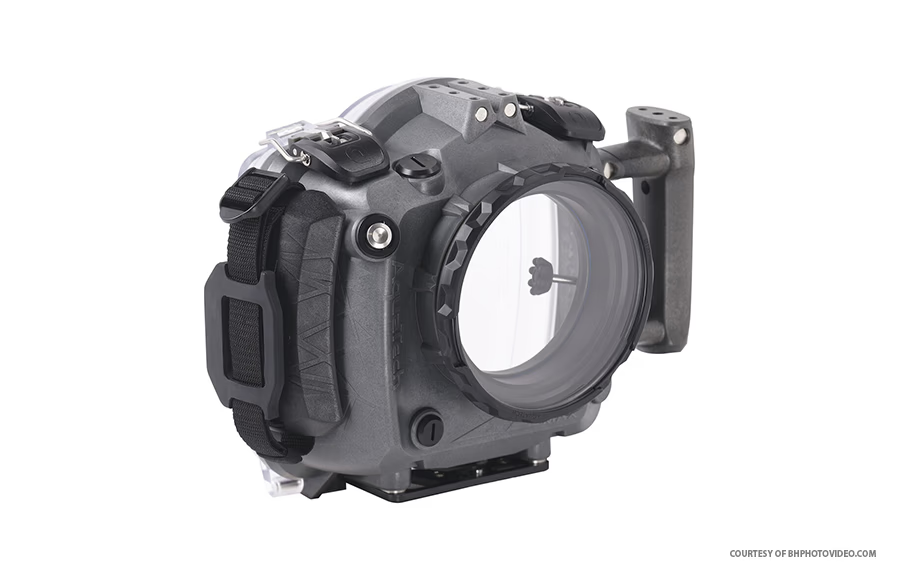
Pros: Slim, lightweight profile · Tactile controls · Quick attachment and removal Cons: Limited depth rating of approximately 33 feet
If you've ever wrestled with a bulky underwater housing that felt more like a diving bell than a camera accessory, the AQUATECH EDGE Pro will come as a genuine relief. Compatible with select Sony mirrorless bodies including the a7R IV, a1, a7S III, and a9 II, this housing is impressively compact and lightweight.
It feels like a natural extension of the camera rather than a separate piece of equipment, which makes a real difference when you're trying to compose shots in moving water. The tactile push-button controls are precise and easy to operate even with gloves on, and the hard-anodized aluminum and stainless steel construction handles demanding saltwater environments without complaint.
The trade-off is depth. At around 33 feet, this housing is best suited to snorkeling, shallow reef photography, and surf work rather than deep-water diving. But for those use cases, it's one of the most enjoyable housings to work with.
3. Backscatter UH-EM10IV Underwater Octo Housing — Best Ergonomics
Pros: Excellent ergonomics · Built-in moisture alarm · RC flash trigger included · Competitive pricing Cons: Distinctive marine-pattern aesthetic may not appeal to everyone
The Backscatter UH-EM10IV earns its place on this list for three reasons: how it feels in the hands, what it includes, and what it costs.
Ergonomically, this housing is one of the most satisfying to use. Every control feels solid and deliberate, giving you confident access to your camera's shutter, zoom, and other functions without fumbling. It's the kind of housing that disappears from your mind while you're shooting — which is exactly what you want.
Feature-wise, it punches well above its price. The included RC flash trigger is a genuine bonus for anyone shooting with external strobes, and the vacuum system ensures a reliable seal every time. The built-in moisture alarm is a particularly smart addition — if water somehow begins to enter the housing, you'll know immediately and can surface before any damage occurs.
Pricing is notably more accessible than the Ikelite or AQUATECH options, making it a strong choice for photographers who want capable performance without a four-figure outlay. The only divisive element is the housing's marine-themed design pattern, which is more playful than the clean, utilitarian look of competing models.
4. AOI Underwater Housing — Most Durable
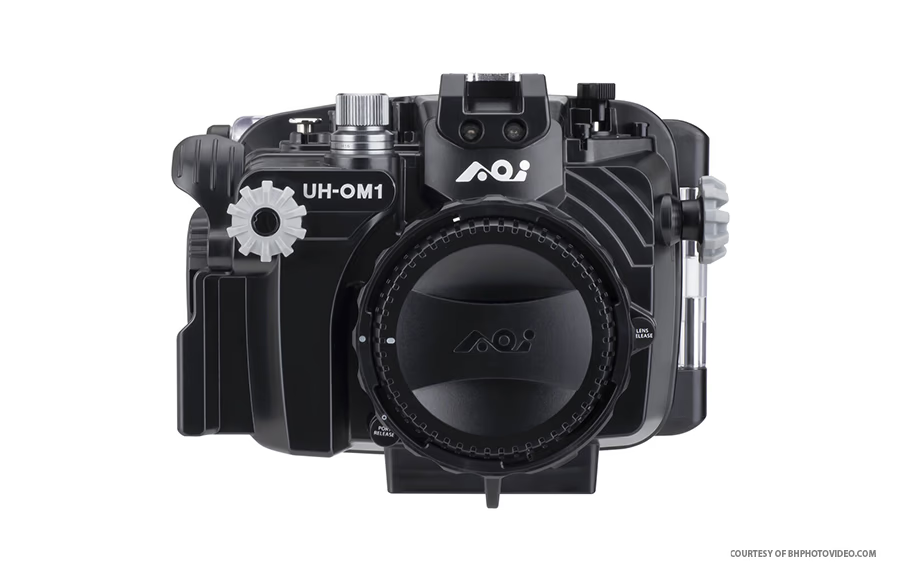
Pros: High-grade polycarbonate construction · 148-foot depth rating · Integrated vacuum and water detection Cons: Compatible with a limited range of camera models
For photographers who prioritize protection above all else, the AOI Underwater Housing is worth serious consideration. Designed for OM SYSTEM OM-1 and OM-1 Mark II bodies, this housing is built from high-grade polycarbonate that resists saltwater corrosion and physical impact with ease.
The integrated vacuum system and water detection feature work together to give you real peace of mind before and during a dive. Knowing that your housing will alert you to any breach — rather than discovering it after the fact — is invaluable when you're 100+ feet below the surface. With a depth rating of 148 feet, this housing is well suited to recreational and semi-professional diving.
The main limitation is compatibility. Unlike some housings that span multiple brands and models, the AOI is tailored to a specific selection of cameras. If your body is on the list, it's an excellent choice; if not, you'll need to look elsewhere.
5. DiCAPac Waterproof Case — Best Budget Option
Pros: Very affordable · Broad camera compatibility · UV-coated lens port · Includes neck strap Cons: Shallow depth rating of 16.4 feet · Basic design and functionality
Not everyone needs a $2,000 professional housing. If you're a casual shooter who wants to capture some underwater moments on a snorkeling vacation or at the beach, the DiCAPac Waterproof Case offers a practical, budget-friendly entry point.
Constructed from a combination of PVC, TPU, ABS, polycarbonate, and silicone, this case keeps water and sand out while allowing full access to your camera's controls. The UV-coated lens port helps maintain image clarity and protects against lens distortion, and the included neck strap makes it easy to carry between shots.
The depth limit of 16.4 feet means this is strictly a shallow-water option — think snorkeling, pool photography, or beach surf shots rather than scuba diving. It's also less refined than a dedicated housing, and you may find the controls slightly awkward to operate at first. But for the price, it delivers solid value and a reasonable level of protection for casual use.
How to Choose the Right Underwater Housing
Depth Rating
This is the most critical spec to check. If you're a recreational diver, you'll want a housing rated to at least 100 feet. Snorkelers and surface swimmers can get away with much shallower ratings. Never push a housing beyond its stated depth limit — the consequences can be catastrophic for your camera.
Build Quality and Sealing
Look for housings with robust O-ring seals, vacuum systems, and moisture detection. These features aren't just nice to have — they're your last line of defense against water damage. High-grade aluminum and polycarbonate are the materials of choice for serious underwater work.
Camera Compatibility
Always verify that a housing is specifically designed for your camera model. Many manufacturers offer model-specific variants, and using the wrong housing can compromise the seal or prevent access to key controls. Interchangeable lens port systems are a major advantage if you plan to shoot with multiple lenses.
Ergonomics and Controls
You'll often be shooting in challenging conditions — strong currents, low visibility, cold water. A housing with well-positioned, tactile controls makes a significant difference to your shooting experience and the quality of your results.
Practical Tips for Underwater Housing Photography
- Always test your housing in a bucket of fresh water before your first dive. Check for leaks and confirm all controls work as expected.
- Rinse your housing thoroughly in fresh water after every saltwater session to prevent corrosion and extend its lifespan.
- Use a vacuum system before every dive, not just the first time. Seals can degrade over time.
- Carry spare O-rings and inspect them before each use. A damaged O-ring is the most common cause of housing floods.
- Shoot in RAW format when possible — underwater images often need significant color correction in post, and RAW files give you far more latitude.
- Add a red filter or use a strobe to compensate for the loss of warm tones at depth. Water absorbs red and orange wavelengths quickly, leaving images with a blue-green cast.
- Move slowly and steadily underwater to avoid stirring up sediment and to give marine life time to settle around you.
Conclusion
Underwater photography is one of the most rewarding and technically demanding disciplines in the field — and having the right housing makes all the difference. Whether you're a professional marine photographer or a curious traveler who wants to document a coral reef, there's an option on this list to suit your needs and budget.
The Ikelite Deluxe 200DL remains the top pick for serious underwater work, offering unmatched depth performance and a complete feature set. The AQUATECH EDGE Pro is the go-to choice for photographers who value a slim, elegant design, while the Backscatter UH-EM10IV strikes an excellent balance between features, ergonomics, and price. For those on a tight budget, the DiCAPac Waterproof Case offers a practical starting point for shallow-water shooting.
Whatever you choose, invest in quality, maintain your gear carefully, and take the time to learn your housing before you take it on a serious dive.
Frequently Asked Questions
How deep can underwater camera housings go? It varies significantly by model. Entry-level cases may only be rated to 15–20 feet, while professional housings like the Ikelite Deluxe 200DL can handle depths of up to 200 feet. Always check the manufacturer's depth rating before use, and never exceed it — water pressure increases rapidly with depth, and exceeding the rated limit risks flooding the housing.
Do I need a special lens for underwater photography? Not necessarily, but lens choice matters. Wide-angle lenses are popular for reef and marine life photography because they allow you to get close to subjects while still capturing the surrounding environment. Many professional housings feature interchangeable port systems that accommodate different lenses and lens types.
What causes underwater housings to flood, and how can I prevent it? The most common cause is a damaged or improperly seated O-ring seal. Always inspect O-rings before each dive, replace them if they show any signs of wear or cracking, and apply a thin layer of silicone grease to keep them supple. Using a vacuum system to verify the seal before entering the water is the most reliable way to prevent flooding.
Can I use an underwater housing for freshwater photography as well as saltwater? Yes — underwater housings work in both freshwater and saltwater environments. However, saltwater is significantly more corrosive, so it's especially important to rinse your housing thoroughly in fresh water after every ocean session. Freshwater use is generally gentler on the housing's components.
Is an underwater housing worth the investment for casual photographers? It depends on how often you plan to shoot underwater. If you're a regular diver or snorkeler who wants to document your experiences, even a mid-range housing will pay for itself quickly in terms of the shots it enables. For very occasional use, a budget option like the DiCAPac case may be sufficient. Either way, the images you can capture beneath the surface are unlike anything you can achieve on land.