Interviews
PhotoVogue Festival: Hayley Lohn on What Is Beauty
Hayley Lohn took part in "What is Beauty?", the exhibition staged at PhotoVogue Festival 2023, and contributed to one of photography's oldest and least settl...
Hayley Lohn took part in "What is Beauty?", the exhibition staged at PhotoVogue Festival 2023, and contributed to one of photography's oldest and least settled arguments. In her interview for the festival's Echoes series, she described work that does not reject beauty so much as widen the category until it can hold the people who were previously left out of it.
That is a more difficult position than either praising or dismissing beauty, and it produces photographs that are hard to look at quickly.
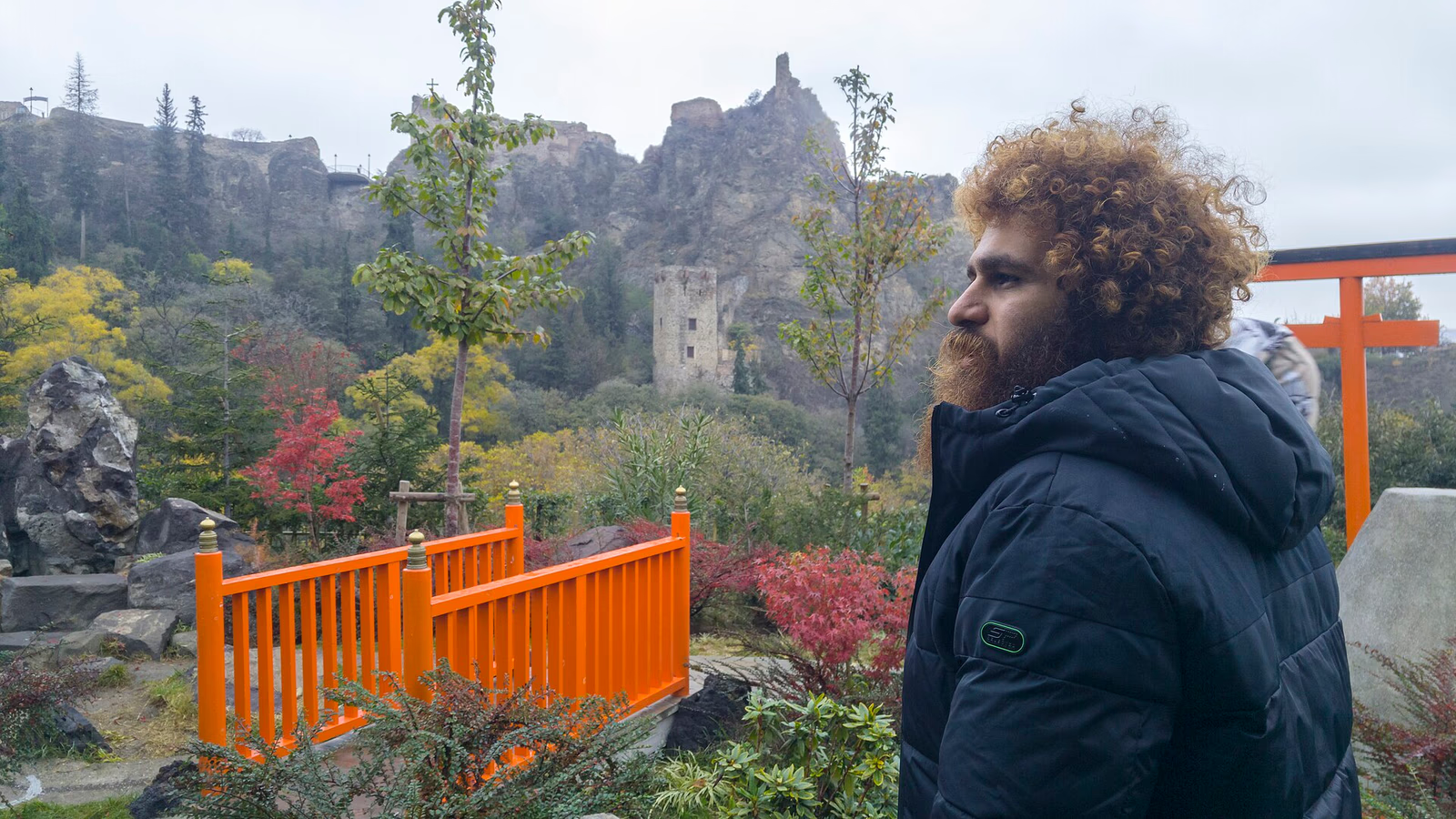
Photo: Fashion Time, Modeling Photography in Tbilisi - Iranian Model - Jorj Barber 01.jpg by Mostafameraji — CC0, via Wikimedia Commons.
Beauty Beyond Convention
Fashion photography spent most of the last century working from a very narrow definition of beauty: symmetrical features, a specific body type, skin that photographs evenly, and an expression that suggests nothing in particular. Lohn's subjects do not fit that template, and the photographs do not apologise for them.
Her images find beauty in texture, in imperfection, and in the details that make a face distinctly itself rather than generically attractive. A scar, an uneven jawline, a slightly crooked nose, the way skin creases around an eye that has actually been smiling for twenty minutes: these are the specifics that a conventional beauty standard filters out, and they are usually the thing that makes a portrait worth returning to.
For any photographer, that raises a direct question. What would your images look like if you stopped trying to make people look conventionally beautiful and started trying to make them look like themselves? The honest answer is that most of us would have to relearn lighting, because the setups we default to were designed to flatter a standard rather than describe a person.
The Politics of Beauty
What a culture considers beautiful is never neutral. It is shaped by commerce, by who is buying magazines, by which faces have been reproduced often enough to feel normal, and by what a society rewards.
Lohn engages beauty as a political question rather than only an aesthetic one: who gets to be seen as beautiful, and why? Her method is not argumentative. She photographs subjects who sit outside conventional standards with exactly the care and attention normally reserved for a professional model, and the juxtaposition does the work. A viewer expecting an unflattering photograph finds a portrait, and that mismatch is where the thought begins.
The practical consequence is a discipline that any photographer can adopt. Light every subject as though they were the point of the photograph. Do not use a soft, forgiving setup for one person and a hard, documentary setup for another. The technical treatment is the editorial claim, and audiences read it correctly even when they could not name what they noticed.
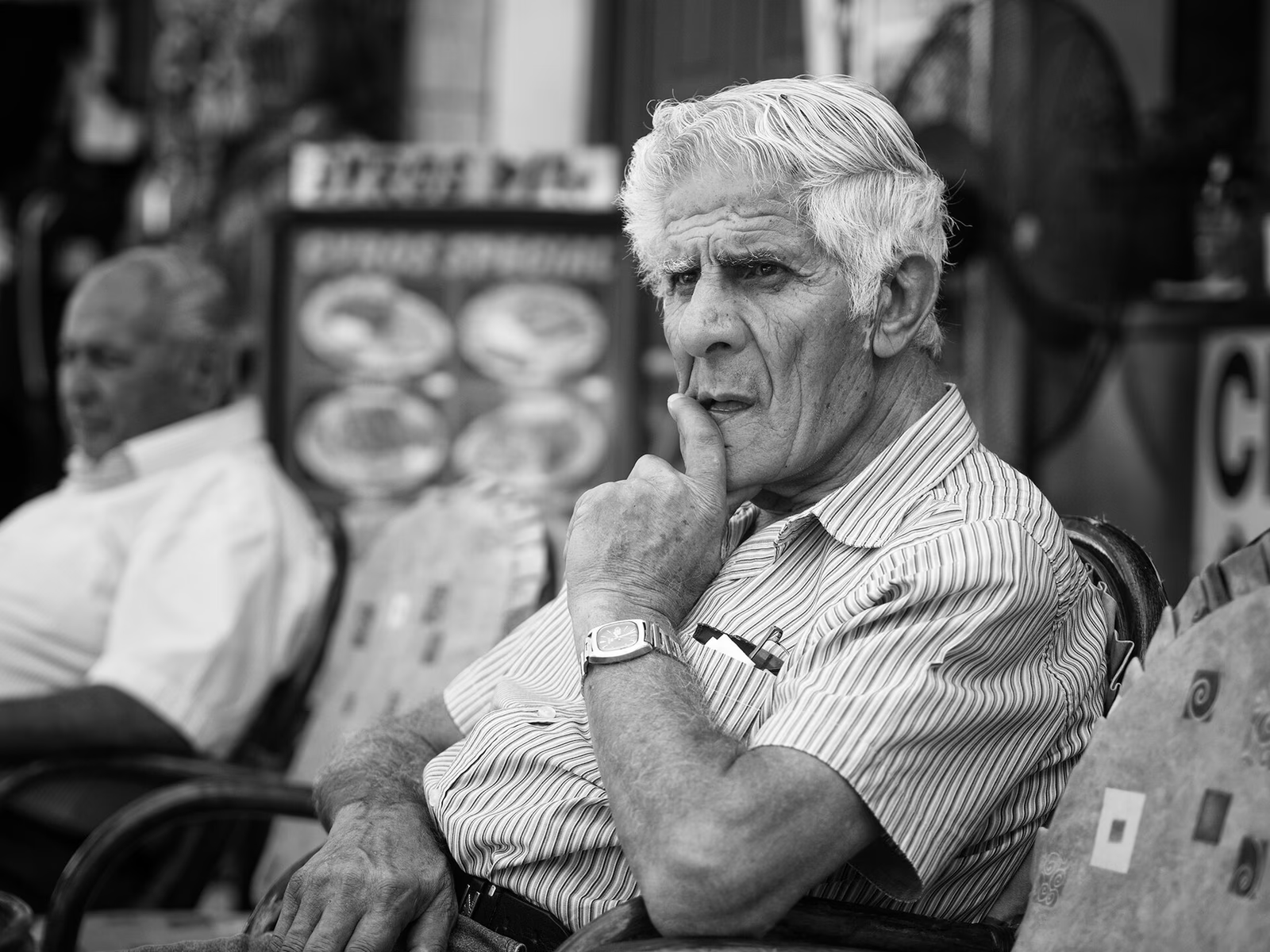
Photo: Elderly man in Rhodes, Greece (black and white).jpg.jpg) by Martin Hricko — CC BY 3.0, via Wikimedia Commons.
What the PhotoVogue Festival Actually Is
PhotoVogue is the section of Vogue Italia that has, for over a decade, published photography on the basis of the work rather than the size of the photographer's following. Its annual festival in Milan combines exhibitions, talks and portfolio reviews, and the open calls that feed it function as one of the few genuine routes into editorial photography for people with no industry access.
"What is Beauty?" was the 2023 edition's central question, which is a useful illustration of how the festival operates. Rather than exhibiting a house style, it sets a question and lets several dozen photographers answer it differently. For a photographer, that is the more interesting proposition: the brief is broad enough that a series has to make its own argument, and specific enough that it needs to be about something.
The Echoes interviews, in which participating photographers talk through the work, are worth reading as a craft resource rather than as publicity. Photographers explaining their own decisions in plain language is rare, and the explanations tend to be more useful than the photographs themselves.
Photographing People Who Are Not Models
Most photographers learn portraiture on people who are comfortable in front of a camera. Working with someone who is not produces a different set of problems, and solving them is the fastest way to improve.
Start with a conversation and no camera. Ten minutes of talking before you take anything out changes the session. The subject needs to know what the photographs are for and what will happen to them.
Give direction that is about them, not the frame. "Turn slightly" is a technical instruction that reminds someone they are being arranged. "Tell me about that ring" produces an expression, and the expression is the photograph.
Do not correct what makes a face specific. Retouching a mole, evening out an asymmetric smile or smoothing the skin of someone in their fifties all remove the evidence that a real person was in front of you.
Use light that describes rather than flatters. Soft directional light preserves texture and shape, which is what makes a face look like itself. Flat, shadowless light makes everyone look the same, which is the opposite of the point.
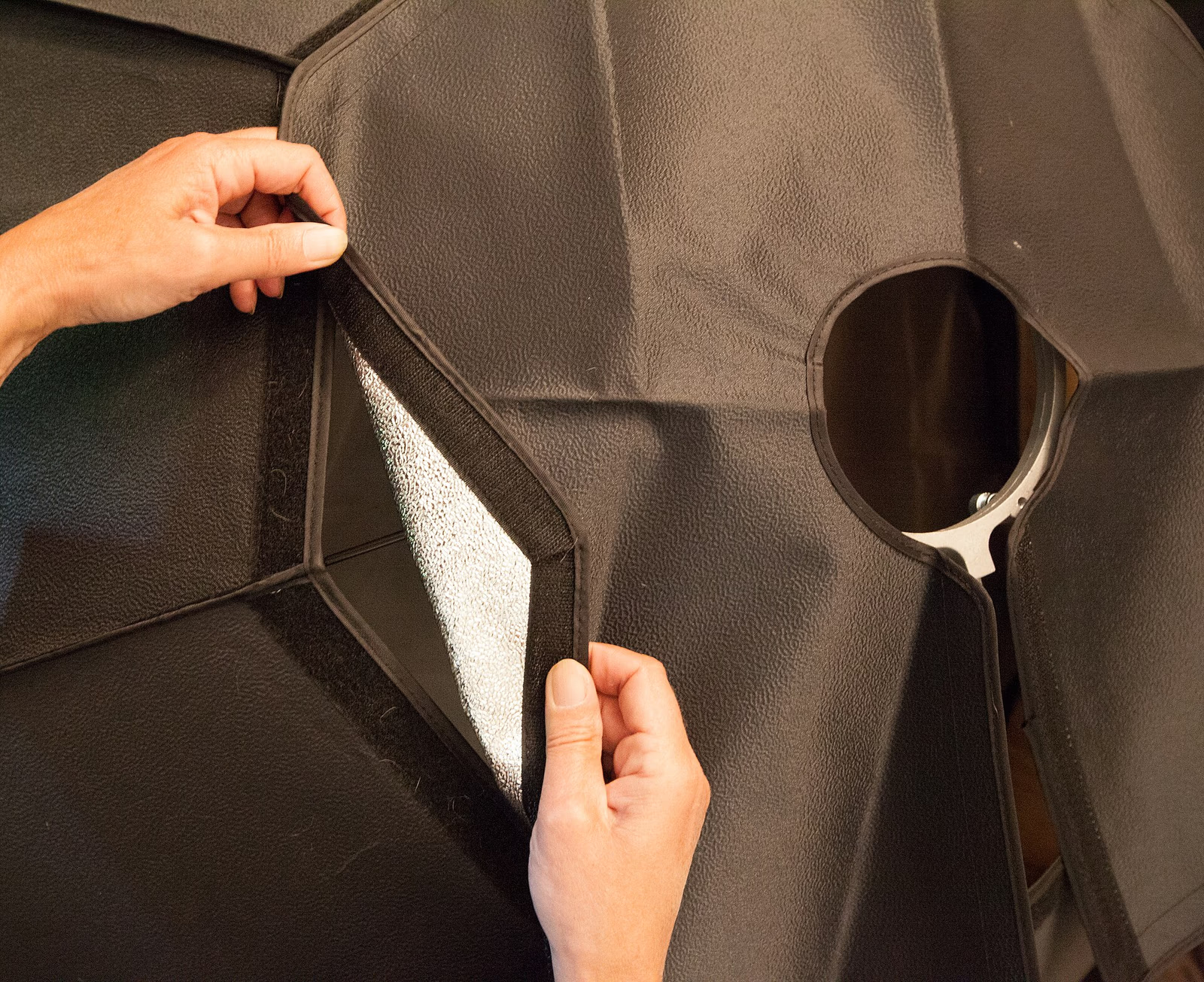
Photo: Studio Lighting Equipment WMDE IMG 3250 edit.jpg by Christoph Braun — CC0, via Wikimedia Commons.
Practical Tips
- Expand your definition of beauty beyond conventional standards.
- Photograph the specific rather than the generic: texture, imperfection, and individual detail.
- Engage with beauty as a political question, not only an aesthetic one.
- Give the same care and attention to every subject, regardless of how conventionally attractive they are.
- Be direct about what the photographs are for, and get consent you can explain.
- Resist retouching that removes what makes a face particular.
- Light a subject the way an editorial would. The technical treatment is the claim you are making.
- Study interview series where photographers explain their own decisions.
Further Reading
- inside a quiet studio practice
- one-window portrait lighting setup
- how to choose your first prime lens
Conclusion
Hayley Lohn's contribution to the PhotoVogue Festival's "What is Beauty?" exhibition is an argument made photographically: beauty is broader than the industry's template, and the way to demonstrate that is not to attack the standard but to photograph people as carefully as the standard's beneficiaries have always been photographed.
For photographers, this is less a matter of politics than of attention. The subjects who sit outside the usual conventions are usually the ones whose faces carry the most information, and they will only surrender it to a photographer who has made them comfortable enough to stop performing. Widen the definition and the work gets better.
FAQ
What was the PhotoVogue Festival's "What is Beauty?" exhibition?
A group exhibition at the 2023 PhotoVogue Festival featuring photographers who challenge conventional definitions of beauty. The participating artists treated beauty as a cultural, political and personal question rather than a fixed standard.
How can I challenge beauty standards in my photography?
Photograph people who are not conventionally represented in fashion imagery, and give them the same care and attention you would give a model. Let their specific, individual beauty emerge instead of forcing them into a generic template.
Should I retouch a portrait to meet conventional standards?
Retouch to remove distractions, not identity. Smoothing skin, removing distinctive marks or evening out an expressive asymmetry makes a face less specific, and specificity is what makes people recognise themselves in a photograph.
What lighting suits subjects who are not professional models?
Soft, directional light that preserves texture. Flat shadowless light flattens everyone into the same face, which is the opposite of what a portrait should do. Window light or a single diffused source is enough.
How do I make a non-model comfortable in front of the camera?
Talk before you photograph, be clear about where the images will appear, and give direction that is about the subject rather than the frame. Ask a question they want to answer and photograph the answer rather than the pose.
What is the PhotoVogue Festival?
An annual photography festival run by PhotoVogue, the Vogue Italia platform that selects work on merit rather than following. It combines exhibitions, talks and portfolio reviews, and its open calls are one of the few realistic entry points into editorial photography.