Interviews
Photography and the Art of Seeing: Training Your Eye
The difference between a photographer and someone who owns a camera is not equipment and not technical knowledge. It is the ability to see: to notice the lig...
The difference between a photographer and someone who owns a camera is not equipment and not technical knowledge. It is the ability to see: to notice the light on a wall at four in the afternoon, the geometry of a street corner, or the expression that crosses a face and is gone before most people register it happened.
That ability is trainable. It is also the slowest thing to learn in photography, because it cannot be bought, downloaded or shortcut, and because nobody can hand it to you. What follows is a working method rather than a philosophy.
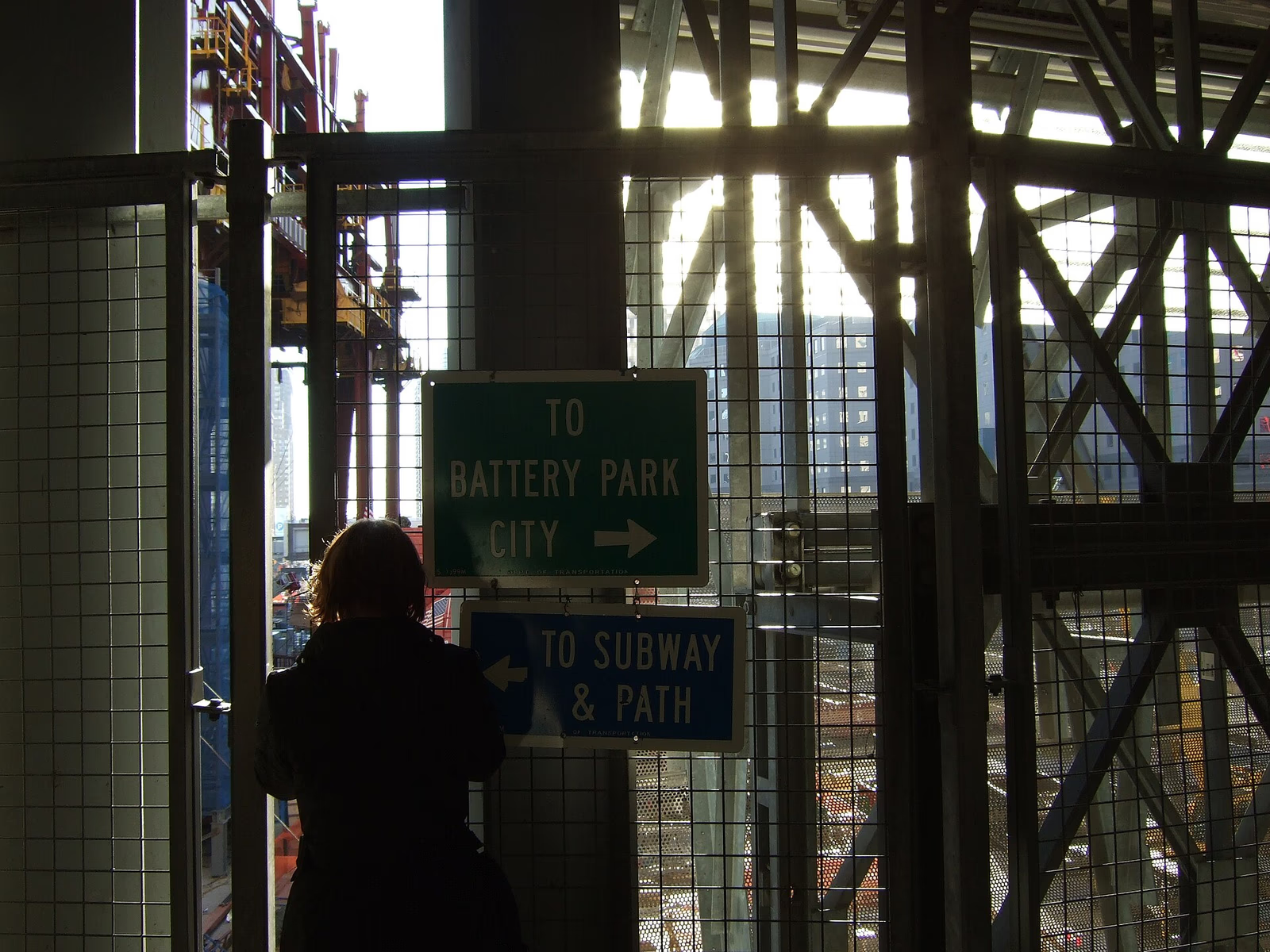
Photo: Manhattan New York City 2009 PD 20091129 010.JPG by Sterilgutassistentin — CC BY-SA 3.0, via Wikimedia Commons.
Learning to Notice
Most people move through the world without seeing it. Nothing is wrong with them; attention is expensive and the brain discards almost everything it processes. Photographers deliberately train against that filtering, and the training is unglamorous.
Walk more slowly than you need to. Look up, because most people look straight ahead at eye level, and the top third of any street is unphotographed territory. Look down. Stop and turn around, since the view in the opposite direction is usually better than the one you walked past. Sit somewhere for ten minutes and watch a single patch of ground change as the light moves.
The effect compounds. The more you notice, the more there is to photograph, and the more you photograph, the more you notice. Photographers who produce work consistently well into their careers are almost never the ones with the best equipment. They are the ones who never stopped paying attention.
Light Before Subject
Amateur photographers see a subject and try to photograph it. Experienced photographers see light and let it lead them to a subject.
The distinction changes what you do on any given day. If you set out looking for subjects, you are dependent on what happens to be there. If you set out looking at light, you can photograph almost anything, because the light is doing the work. A brick wall in flat overhead sun is a brick wall. The same wall at sunset, with the texture raking across it in warm light, is a photograph.
Before you consider what you are photographing, learn to describe the light in front of you:
- Direction. Where is it coming from, and what does it do to the shadows? Side light reveals texture, backlight separates the subject from the background, and front light flattens everything.
- Quality. Is the edge of a shadow crisp or soft? Crisp means a small source and high contrast; soft means a large source and gentle modelling.
- Colour. Warm or cool, and how does it sit against whatever it is illuminating?
- Change. How long until this is different? A good photograph is often a time-sensitive opportunity, not a permanent one.
Learning those four questions does more for your work than any new lens.
Composition as Instinct
Composition is taught as a set of rules, which is a problem, because rules produce self-conscious photographs. The point of rules is to be a scaffold while you build the intuition underneath, and the intuition is what you actually use.
You can recognise the transition when it happens. You stop thinking about the rule of thirds and begin feeling when a frame is balanced. You move two steps to the left without deciding to, because something in the frame is wrong and the movement fixes it. That instinct is not a gift. It is compiled experience, and it comes from three unremarkable activities: looking at thousands of images, making thousands of your own, and paying attention to which ones worked and why.
Most photographers do the first two and skip the third. Reviewing your own archives is the part that builds the intuition, because it forces you to compare decisions rather than admire outcomes.
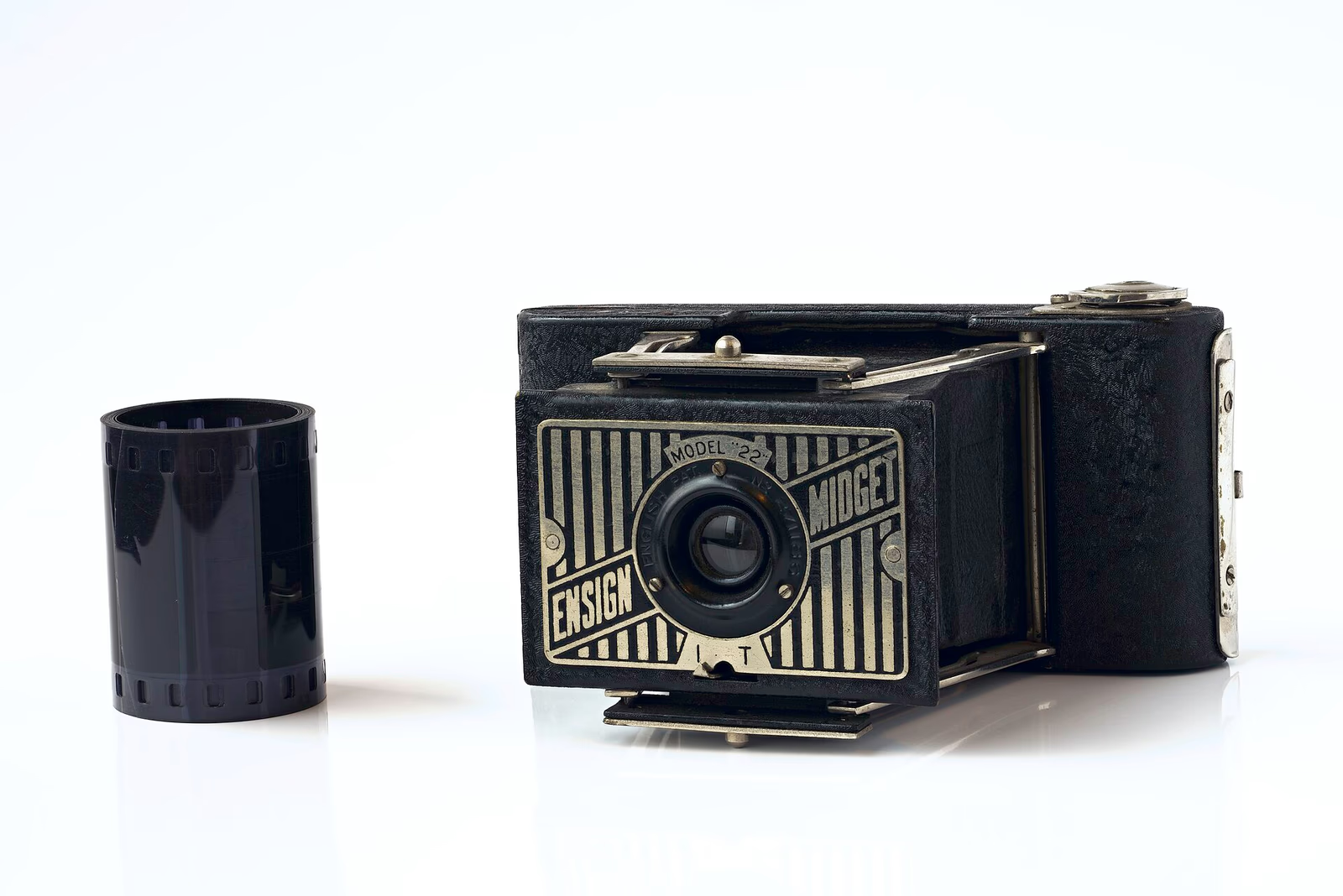
Photo: Ensign Midget - model 22 camera in comparison to a type 135 film roll.jpg by Franz van Duns — CC BY-SA 4.0, via Wikimedia Commons.
Exercises That Actually Train the Eye
Theory does little here. These six exercises do.
The no-camera walk. Leave the camera at home and look for thirty minutes. Note three scenes you would have photographed. Doing this once a week builds the noticing habit without turning it into a performance.
One subject, thirty days. Photograph the same thing every day for a month: a person, a window, a tree, a doorway. By day ten you have exhausted the obvious, which is when your eye starts working.
One lens for a month. A fixed focal length forces you to move instead of zoom, and moving is how you learn what a scene looks like from somewhere other than where you were standing.
Copy a photograph you admire. Identify a picture you love, work out how it was lit and framed, and try to reproduce it. You will learn more from one attempted copy than from a hundred hours of looking at other people's work.
The light log. Twice a day for a fortnight, photograph the same location at different hours. The resulting set is a record of how light behaves, which is the material you are working with.
Describe a scene out loud. If you cannot say what is interesting about a scene, you will not photograph it well. Narrating forces the decision into words, and the words usually suggest the picture.
Why Technical Skill Is Not the Bottleneck
Technical ability is genuinely easier than seeing, and it has become more so every year. Modern cameras meter, focus and expose more reliably than a skilled photographer working manually in 1990. Editing is faster. Gaps in knowledge close in weeks.
This is why technical proficiency is no longer a competitive advantage and why it is a bad place to spend your practice time once the basics are secure. Nobody has ever hired a photographer because they understood histograms. They hire for judgement: which moment, which frame, which five images out of four hundred.
The photographers whose work holds up over decades are usually the ones who treated the camera as an inconvenience separating them from the subject. As the saying goes, the best camera is the one that does not get in the way of seeing.
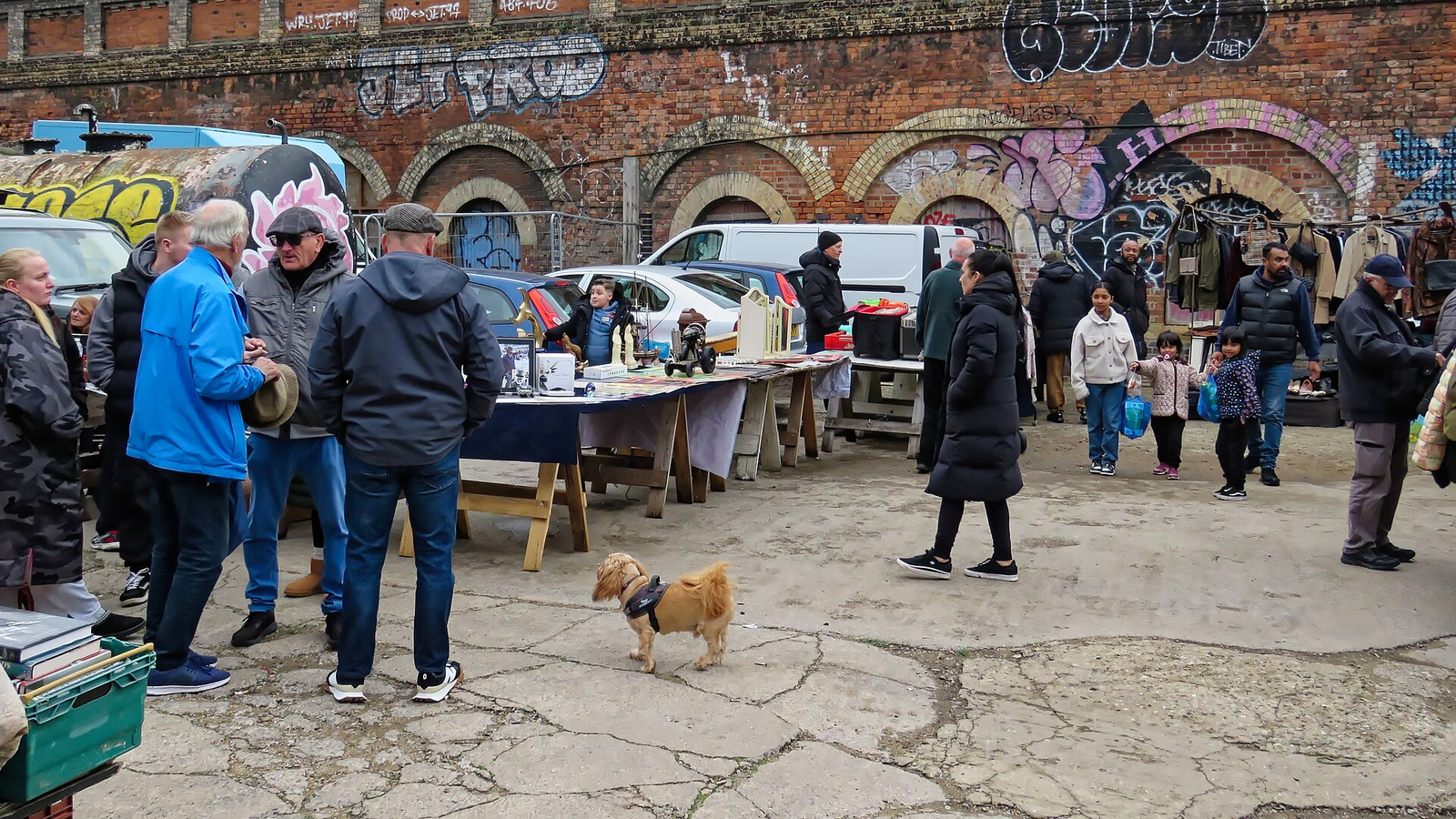
Photo: Sclater Street Yard market, Brick Lane Market London E1 o.jpg by Acabashi — CC BY-SA 4.0, via Wikimedia Commons.
Practical Tips
- Walk slowly and notice what you normally ignore.
- Look at light before you look at subject. Learn to describe direction, quality and colour.
- Look up. The top third of a street is mostly unphotographed.
- Study great photographs and ask what decision the photographer made.
- Practise composition until it becomes instinct, then forget the rules.
- Do the exercises: no-camera walks, one subject for thirty days, one lens for a month.
- Review your own archive. Comparing your decisions is what compiles intuition.
- Keep technical skill sufficient and spend the rest of your practice on looking.
Further Reading
- one-window portrait lighting setup
- choosing your first prime lens
- what Instagram photographers actually shoot
Conclusion
The art of seeing is a practice rather than a talent, and it is built out of attention rather than equipment. Learn to notice what you usually walk past, learn to read light before you decide on a subject, and let composition become something you feel rather than calculate.
None of it is fast. It takes years, and the only reliable acceleration is deliberate looking plus honest review of your own work. That is also the good news, because it means the thing separating you from better photographs is not money or access. It is what you do with the next hour you spend in the world with your eyes open.
FAQ
How can I train myself to see better as a photographer?
Walk without a camera sometimes and simply look. Study light at different times of day from the same position. Look at paintings as well as photographs. Practise describing what you see in words, because if you cannot articulate what makes a scene interesting, photographing it well is unlikely.
What is more important, technical skill or the ability to see?
The ability to see. Technical skill can be acquired in months and is now largely handled by the camera itself. Noticing what other people miss, finding a picture in ordinary light and composing intuitively takes years of practice, and it is what separates photographers from people who own cameras.
How do I know when my composition has become instinctive?
When you stop calculating rules and start feeling that something is wrong with a frame, usually by moving a step or two without deciding to. The transition happens quietly, and it comes from volume plus review rather than from study alone.
How long does it take to develop a photographic eye?
There is no fixed answer, but the variable is deliberate attention rather than time. Photographers who review their own work critically improve noticeably in a year or two; photographers who shoot heavily and never compare their decisions can plateau for a decade.
Should I buy better gear to improve my photographs?
Rarely. Better equipment solves problems you do not have yet: low light, very fast action, large prints. It does nothing for the more common problems, which are not noticing a scene, choosing the wrong moment, and standing in the wrong place.
How do I find something to photograph when nothing interests me?
Look at light instead of subjects. Find one patch of wall, ground or water and photograph it as the light changes through the day. Constraint is usually what breaks a block, because it removes the option of waiting for something better to appear.