Tutorials
Instagram Stars Share Their Secrets to Taking Amazing Photos
Want to take your Instagram feed to the next level? Or maybe you just want to snap better vacation pictures that actually look good? We reached out to some o...
Want to take your Instagram feed to the next level? Or maybe you just want to snap better vacation pictures that actually look good? We reached out to some of our favorite Instagram photographers to get their secrets. While they expertly capture gorgeous landscapes, the perfect latte, striking portraits of friends, and mesmerizing street scenes, here's the thing — they are all self-taught photographers with seriously down-to-earth, practical advice. From which cameras to use (yes, they actually do rely on their iPhones sometimes) to the secret of capturing perfect light, these are the tips and tricks you need to seriously elevate your photos.
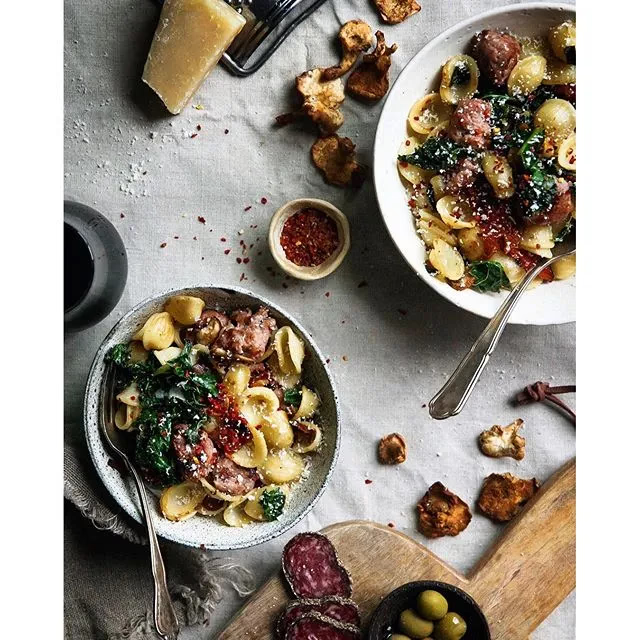
The Foodie: Joann Pai — Mastering Food Photography
Joann Pai's passion for food came long before photography entered her life. "I started photographing food as a way to document moments of my life and share them with friends and family, mainly through social media," she explains. Her two hobbies merged when a Vancouver business owner asked her to photograph food products professionally — and she hasn't looked back since.
Camera of Choice: Pai shoots with a Fuji Xe2 or her iPhone 6s. "I was looking for a compact camera with an interchangeable lens to travel with," she says. "I love the quick focus of the Fuji — the quality and the tones of the images. But really, I'm just a sucker for the retro look." For anyone starting out in food photography, this combination of a capable mirrorless camera and a reliable smartphone gives you tremendous flexibility without an overwhelming amount of gear to lug around.
Harness Natural Light First: The iPhone takes great photos when there's ample light — and that's the key insight. When dining out, Pai always gravitates toward a window seat where natural light pours in, steering clear of the harsh artificial lighting that restaurants typically use. Top-down shots tend to be more successful because they minimize the lens distortion that comes from the iPhone's wide-angle lens. This is a game-changing tip for anyone shooting food in dimly lit restaurants: simply positioning yourself near a window can transform a flat, yellowish plate into a vibrant, magazine-worthy image.
Play With Your Food — Literally: Photos that aren't too close up but tell more of a story perform dramatically better. Think about the narrative you want to convey and keep that in mind as you compose your shot. Try photographing from different angles; experiment with composition and props until you find your sweet spot. Sometimes a slightly pulled-back shot that includes a coffee cup, a newspaper, or a window frame tells a far richer story than a tight macro of the dish alone.
Develop a Signature Style: To get noticed as a food photographer, you need a recognizable voice and aesthetic. When someone stumbles upon your page, they should immediately get a sense of what your work is about. Instagram is deeply community-focused, so respond to comments, engage with other photographers' work, and reach out to collaborate. Community is everything in this space.
Editing Toolkit: Pai uses VSCO for filters and Snapseed for fine-tuning. Sometimes she just relies on Instagram's built-in editing tools. Her preferred filters are subtle — she keeps the intensity dialed down to levels 3-6 because, as she says, "I like food to look like food."
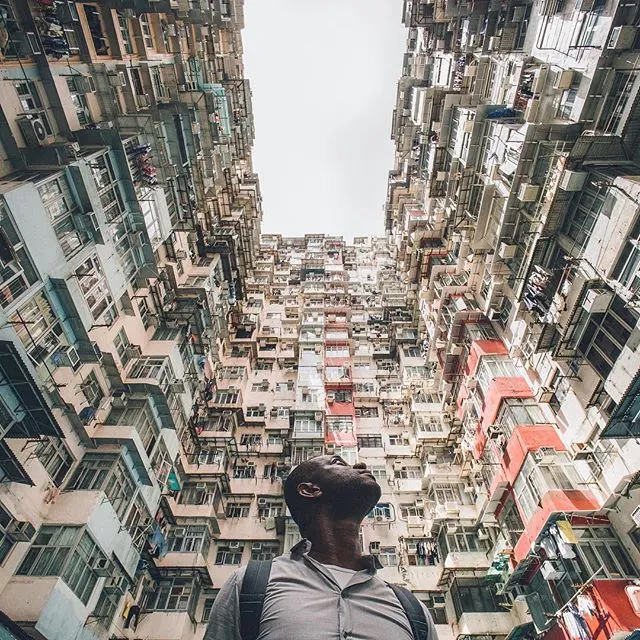
The Urban Dweller: Nicholas La — Street Photography Secrets
Nicholas La learned photography the hard way — through trial and error. "I learned mostly through shooting out in the field, reading photography books, and watching videos online," he says. He now counts Land Rover among his clients, proving that self-taught skills can lead to professional results.
Camera of Choice: La shoots with a Leica M240 and Leica T. "I chose the Leica specifically because of its ability to produce amazing photographs in such a small body," he explains. "I also love the minimal design and compact size because it allows me to shoot street photography while being discreet and not attracting much attention." This is a crucial lesson for street photographers: smaller, quieter cameras let you blend in and capture authentic moments.
Stay Alert — Moments Are Fleeting: In street photography, a moment appears for a split second and vanishes forever. Being aware, present, and ready is absolutely vital. Keep your camera accessible, your settings dialed in, and your eyes scanning constantly.
Find Unique Angles: La is known for his rooftop perspectives. "Sometimes an elevator to the highest floor and finding the roof door does the trick; other times it means walking up 50 flights of stairs; and other times it requires crawling out a window and climbing onto the roof." The lesson? Extraordinary photos often require extraordinary effort.
Be Patient: Some pictures take hours, days, or even years to capture. Being patient and ready to shoot when the moment arrives is everything. Don't rush the process.
Capture Emotion: "When I shoot, I think about the end result as well as the message or emotion I want my viewers to get." Including people in your photos brings depth and emotion that you simply cannot get from a landscape or cityscape alone. A subject also acts as a scale reference, giving the viewer a sense of the location's grandeur.
Composition Over Everything: "Composition can be tricky at times, but as long as you can direct your viewers to the subject of the photo while capturing an emotion or telling a story, then that alone is a great photo."
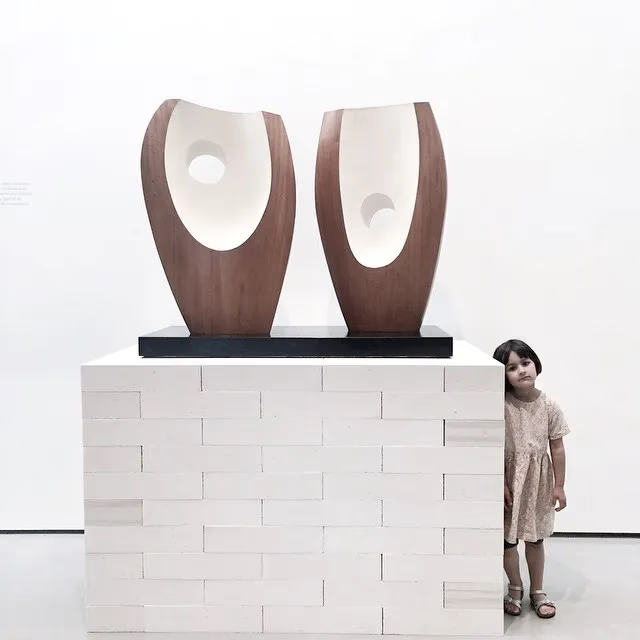
The Mom: Uzma Mir — Interior and Lifestyle Photography
A trained medical doctor, Mir took a break to raise her three kids and found Instagram as a creative outlet. "My home is my primary creative outlet, and I love creating beautiful spaces," she says. Her approach is refreshingly accessible — you don't need exotic locations to create compelling images.
Camera of Choice: Mir relies on her iPhone. "The iPhone is always on me, so I never miss a chance to take a picture. And because the iPhone has so many great apps, I get to edit my pictures easily and quickly." This is an empowering reminder that the best camera is the one you actually have with you.
Find Your Muse Close to Home: Mir's kids have always enjoyed being part of her picture-taking process. "Seeing as I am happier behind the camera, a happy result is that I get ready-and-willing subjects." The best subjects are often right in front of you.
Embrace Candid Moments: "I often mean to take a photo of a landscape or some urban scene, and my kids decide they want in and stride into the shot. Some photos are posed, but most are candid." Those unplanned interruptions often produce the most memorable images.
Stick to a Cohesive Palette: "I have never been good with color, and you will never see yellows or oranges in my feed. I can really only handle one or two colors at a time. Surrounding myself with neutrals is soothing." A consistent color palette creates a visually harmonious feed that feels instantly recognizable.
Compose Your Feed Intentionally: "I figure out what my feed needs — more close-ups or distance shots — and take it from there. I usually fit more into my composition than needed and edit out things until it feels right. Less is always more."
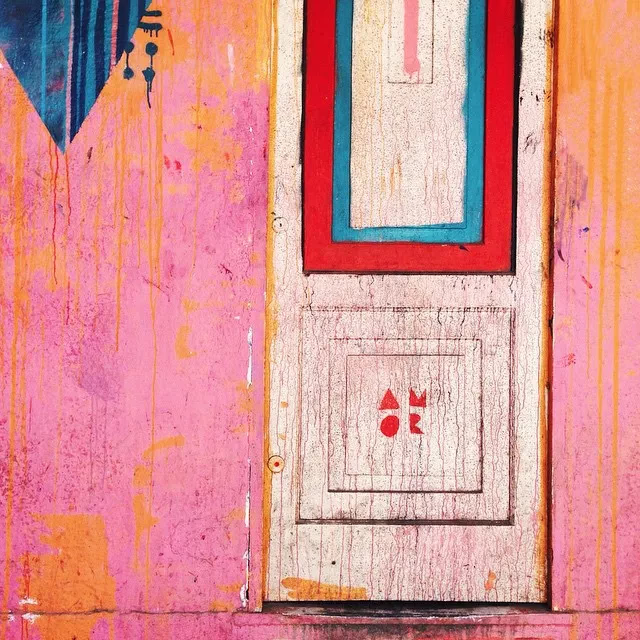
The Color Enthusiast: Paulo del Valle — Mastering Symmetry and Color
Del Valle signed up on Instagram in 2011 under the username @paulodelvalle and gravitated toward landscapes. "I started to get the hang of it and fell in love with photography," he says. In 2013, he launched a second account focused on "colors, portraits, and symmetry."
Camera of Choice: Del Valle uses a Sony A7R II and his iPhone 6s. "I love how the iPhone 6s takes beautiful and sharp photos. I've been using iPhones for many years, and I always upgrade to the new one."
Color-Coordinate Your Feed: "I actually think a lot before posting a new photo, so I make sure the colors of the new one will go well with the colors of the previous one." This deliberate approach to color curation is what separates a random gallery from a cohesive portfolio.
Master Symmetry With the Grid: Turn on the grid on your phone or camera — it divides your screen into nine rectangles. If you're in front of a door or building, stand exactly in the middle, pay attention to the grid so everything is distanced equally, hold your breath, and take the shot. The grid is the most underrated tool in photography.
Talk to Strangers (Respectfully): If you see someone interesting on the street, approach them, introduce yourself, and explain why you want to photograph them. Make it clear there's no commercial intent — it's for social media. Ask if they have Instagram so you can tag them. Have a nice, informal conversation before you take the photo so they feel genuinely comfortable.
Place Your Subject With Purpose: Del Valle either centers his subject or follows the rule of thirds. "When you turn on the grid, you have two vertical lines and two horizontal lines. I place my subject in one of these lines or at their intersection. The horizontal lines help you align your horizon so your photos don't look crooked."
Embrace Gray Weather: "Cloudy days are good for shooting portraits because the light spreads out everywhere." Overcast skies act as a giant softbox — perfect for flattering, shadow-free portraits.
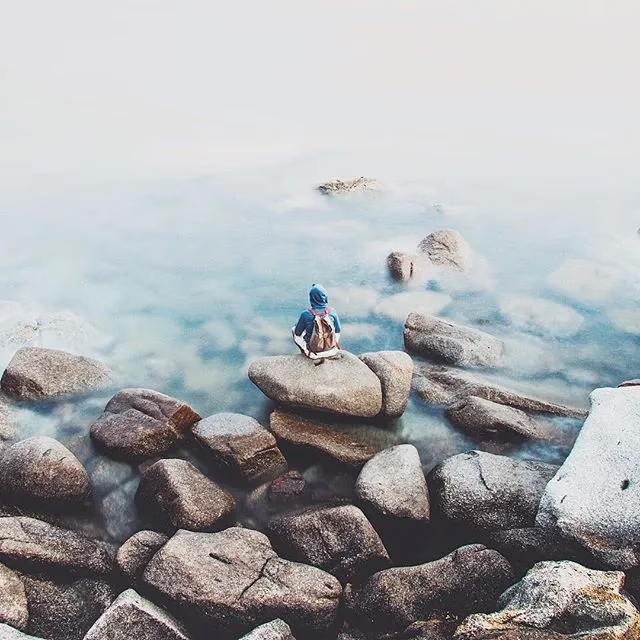
The Sea Lover: Cédric Dasesson — Landscape and Natural Light
A Sardinia native, Dasesson spends much of his time at the beach. "The recurring theme of my account is the sea and its natural geometry outlining the coasts," he says.
Interpret the Landscape Personally: With a background in architecture, Dasesson interprets the landscape in a personal way, looking for geometric elements and natural proportions. Each photograph is a small part of a larger project — always selected based on a concept or idea he wants to communicate.
Natural Light vs. Flash: "I prefer to use natural light at certain times of the day and with particular weather conditions in order to communicate my concept of isolation." He uses flash only for experimentation. For most landscape work, learning to read and work with natural light is far more powerful than introducing artificial sources.
Shoot at Dawn and Dusk: "I love getting soft shadows and contrasts. I usually shoot at dawn and dusk or during overcast days." The golden hours are golden for a reason — the low angle of the sun creates dimension, warmth, and texture that midday light simply cannot replicate.
Build an Identifiable Style: "You need to find an identifiable style in every shot." Consistency is what builds an audience. When someone sees your image in their feed, they should know it's yours without checking the username.
Practical Tips
- Always sit near a window when photographing food indoors
- Turn on the camera grid and use it religiously for composition
- Shoot during golden hour or overcast days for the most flattering light
- Curate your feed by color palette — think before you post
- The best camera is the one you have with you; your iPhone is more than capable
- Be patient: great shots can take hours, days, or years to capture
Conclusion
The biggest takeaway from these five Instagram photographers is that you don't need expensive gear or formal training to create compelling images. Whether you're shooting food on your iPhone by a window, climbing onto rooftops for a unique perspective, or simply documenting your kids in beautiful natural light — the fundamentals remain the same. Pay attention to light, compose with intention, develop a consistent style, and most importantly, tell a story worth telling.
FAQ
What's the best camera for Instagram photography? The best camera is the one you have with you. Most of the photographers featured here use their iPhones alongside dedicated cameras like Fuji, Leica, or Sony mirrorless bodies. Start with your smartphone, master composition and lighting, then invest in a dedicated camera when you feel limited by your phone.
How do I get better lighting in my food photos? Always position yourself near a window with natural light. Avoid restaurant artificial lighting. Use top-down angles to minimize lens distortion from wide-angle phone lenses. For editing, keep filters subtle so food still looks natural and appetizing.
How can I make my Instagram feed look more cohesive? Stick to a consistent color palette. Before posting, check how the new photo's colors work with the previous image. Use similar editing presets or filters across all your photos. Think about whether your feed needs more close-ups or wide shots and balance accordingly.
What's the rule of thirds and how do I use it? Turn on your camera's grid overlay, which divides the frame into nine equal rectangles. Place your subject along one of the vertical or horizontal lines, or at their intersection points. This creates more dynamic, visually interesting compositions than always centering your subject.
How do I approach strangers for street portraits? Approach respectfully, introduce yourself, and explain why you want to photograph them. Clarify that there's no commercial intent — it's for social media or personal work. Have a casual conversation before raising your camera so they feel comfortable. Ask for their Instagram handle so you can tag them.