Gear
Photographer Gray Malin's Travel Tips and the Art of the Aerial Beach Photograph
Gray Malin is the photographer behind some of the most iconic, dreamy aerial beach photographs ever made. His images — meticulously composed from helicopter...
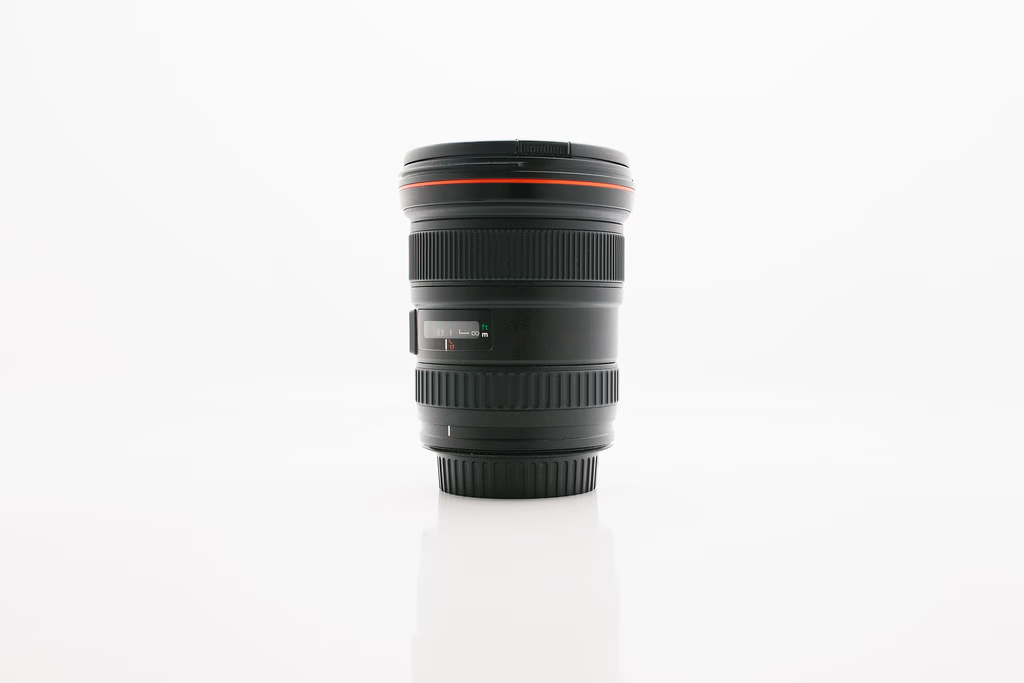
Gray Malin is the photographer behind some of the most iconic, dreamy aerial beach photographs ever made. His images — meticulously composed from helicopter doors and high vantage points — capture the geometry of beach umbrellas, the patterns of sunbathers, and the vastness of coastlines in ways that feel both grand and intimate. When Vogue sat down with him to discuss his travel photography philosophy and his Bon Voyage series, he shared insights that apply to photographers at every level — whether you're shooting from a helicopter or an iPhone.
Plan, Then Let Go
Malin is known for his meticulous pre-production. Before he ever boards a helicopter, he's studied maps, scouted locations via satellite imagery, and planned exactly which beaches he wants to photograph and when the light will be best. But once he's in the air, all that planning serves a single purpose: freeing him to be present and responsive to what's actually happening below him. The patterns of umbrellas shift. The light changes. Unexpected compositions appear and disappear in seconds. Preparation creates the conditions for spontaneity.
This principle applies to all travel photography. Do your research. Know where you want to be and when the light will be best. But once you're there, put the plan aside and respond to what's actually in front of you. The best travel images often come from moments you couldn't have anticipated.
Find the Pattern
What makes Malin's aerial photographs so distinctive is his obsessive attention to pattern and repetition. Rows of striped umbrellas. Clusters of colorful towels. The rhythmic arrangement of bodies on sand. He sees the beach not as a chaotic collection of individuals but as a canvas of repeating forms and colors. This way of seeing — looking for pattern, rhythm, and geometry in the everyday — can elevate any photographer's work. Train your eye to notice repetition: a row of windows, a line of bicycles, the symmetry of a staircase. The world is full of patterns waiting to be framed.
Elevate Your Perspective
Malin's signature move — getting above his subject — is a powerful reminder that changing your physical position can transform an ordinary scene into something extraordinary. You don't need a helicopter. Climb a hill. Find a balcony. Stand on a chair. Shoot from a rooftop. The simple act of seeing from an unfamiliar angle forces viewers to reconsider what they're looking at. A beach seen from ground level is familiar. The same beach seen from above becomes abstract, geometric, and mesmerizing.
Color Is Your Narrative
Malin's work is famous for its vibrant, saturated color palettes. He doesn't just document colors — he curates them. When scouting locations, he thinks about which beaches offer the most compelling color stories: the turquoise water against white sand, the rainbow of umbrellas and towels, the contrast between bright swimwear and neutral sand. For travel photographers, this means being intentional about color. Don't just capture whatever colors happen to be there. Seek out locations and compositions that tell a deliberate color story.
Bring Back the Glamour of Travel
One of Malin's stated goals is to "bring back the glamour to travel." His images capture an aspirational, celebratory vision of travel — the kind that makes you want to book a flight the moment you see it. For photographers, this is a valuable reminder that photography isn't just about documenting reality. It's about creating a vision. Your images can — and should — show the world not just as it is, but as it could be seen: more beautiful, more joyful, more worthy of wonder.
Practical Tips
- Research locations thoroughly before you travel — know where to be and when
- Look for patterns and repetition in everyday scenes
- Change your perspective: shoot from above, below, or unusual angles
- Curate your color palette intentionally — don't just capture whatever's there
- Create aspirational images that make viewers want to experience what you saw
- Prepare meticulously, then stay flexible enough to respond to the unexpected
Conclusion
Gray Malin's approach to travel photography is a masterclass in intentionality. Every image is the result of careful planning, a trained eye for pattern and color, and a willingness to see the world from unfamiliar perspectives. You may never shoot from a helicopter, but you can apply his principles to your own work: plan thoroughly, look for geometry in the everyday, change your angle, curate your colors, and always — always — make the world look a little more glamorous than it felt in the moment.
FAQ
How does Gray Malin shoot his aerial beach photos? Malin typically shoots from helicopters with the doors removed, using professional DSLR or medium format cameras. He plans his flights around optimal lighting conditions and scouts locations extensively via maps and satellite imagery before ever taking off.
Can I achieve aerial-style photos without a helicopter or drone? Yes. Look for high vantage points — rooftops, balconies, hills, observation decks, staircases, or tall buildings. The key is getting above your subject to see patterns and geometry that aren't visible from ground level.
What time of day does Gray Malin shoot? Like most photographers working with natural light, Malin prefers early morning and late afternoon when the sun is lower in the sky. This creates longer shadows, warmer tones, and more dimensional images than harsh midday light.
How does Gray Malin get such vibrant colors? Malin's colors come from a combination of location scouting (choosing beaches with naturally vibrant color palettes), shooting in optimal light, and careful post-processing to enhance saturation and contrast without looking artificial.
What camera gear does Gray Malin recommend for travel photography? Malin emphasizes preparation and vision over specific gear. For most travelers, a high-quality mirrorless camera with a versatile zoom lens and a smartphone with a good camera will cover nearly every situation. The most important piece of equipment is your eye.