Interviews
Met Gala Photographer Hunter Abrams' Tips for Peak Creativity
From backstage and street photography at fashion weeks to the seemingly endless red carpets of awards season, Hunter Abrams has established themselves as one...
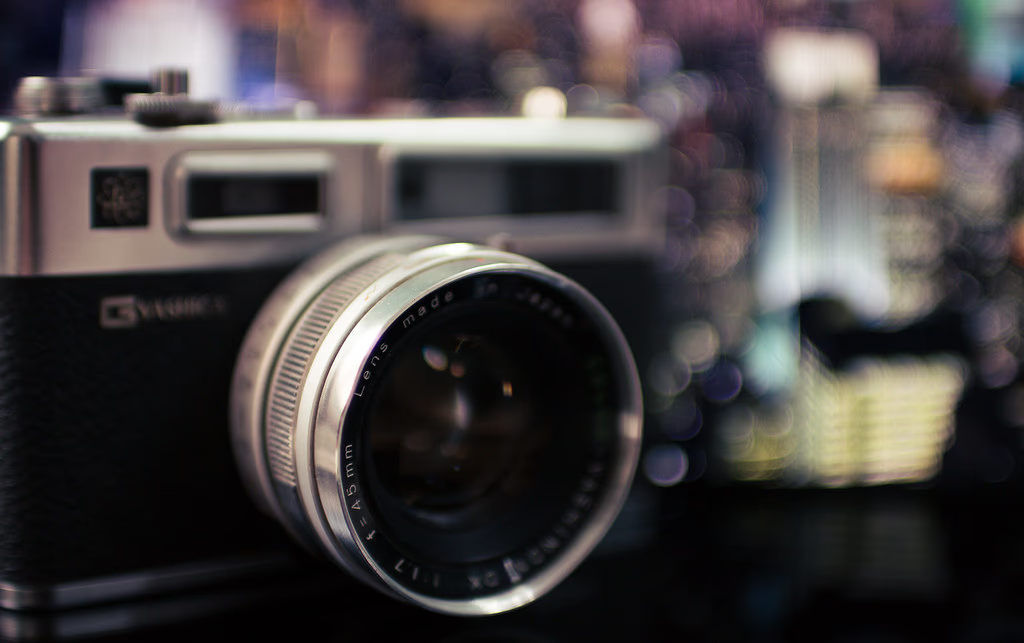
From backstage and street photography at fashion weeks to the seemingly endless red carpets of awards season, Hunter Abrams has established themselves as one of the most creative and adaptive fashion photographers working today. When Vogue Club sat down with Abrams for their Career Secrets series, the Met Gala photographer shared hard-won wisdom from their professional journey — advice that applies whether you're shooting the most exclusive event in fashion or just trying to push your creative boundaries.
Research, Research, and Research
"Research, research, and research," Abrams emphasizes as their first and most important piece of advice. Before any major shoot, they immerse themselves in preparation. They study the venue, the lighting conditions, the subjects they'll be photographing, and the work of other photographers who've shot similar events. They look at fashion history, art references, and cultural touchpoints that might inform their approach. This isn't about copying — it's about building a deep well of visual and contextual knowledge that you can draw from intuitively when the pressure is on. When you're in a high-stakes environment with seconds to capture each shot, preparation is what separates the professionals from everyone else.
Find That Thing That Makes You Different
In a world saturated with photographers, standing out requires more than technical proficiency. Abrams encourages emerging photographers to identify and lean into what makes their perspective unique. It might be a particular way of seeing color, an unusual approach to composition, a gift for making subjects feel at ease, or a background in another creative discipline that informs your photography. Whatever it is, don't suppress it in an attempt to fit in. Your difference is your competitive advantage.
Adaptability Is Everything
Fashion photography — especially at events like the Met Gala — is inherently unpredictable. Lighting conditions change from room to room. Subjects have limited time and varying levels of comfort in front of the camera. Technical problems arise. Weather doesn't cooperate. Abrams' ability to adapt fluidly to changing circumstances is a core part of what makes their work so consistently strong. They don't arrive with a rigid shot list that falls apart the moment something goes wrong. They arrive with a broad creative vision and the technical mastery to execute it under any conditions.
Build Genuine Connections
Abrams' portraits are notable for the comfort and authenticity their subjects project — no small feat when you're photographing celebrities who've been in front of cameras all night. Their secret? They treat every subject as a collaborator, not a target. They talk to people. They learn names. They create an atmosphere of mutual respect and creative partnership, even in the compressed timeframe of a red carpet or backstage moment. When a subject feels seen as a person rather than just a source of content, it transforms the image.
Keep Pushing Through Rejection
Abrams is candid about the challenges of building a career in fashion photography. There were countless rejections, ignored emails, and doors that didn't open. What separated the opportunities they eventually got from the ones they didn't was persistence. They kept shooting, kept refining their portfolio, kept reaching out, kept showing up. The photographers who make it aren't necessarily the most talented — they're the ones who didn't quit when it got hard.
Practical Tips
- Research every aspect of a shoot before you arrive — venues, lighting, subjects, references
- Identify and lean into what makes your creative perspective unique
- Develop technical mastery so you can adapt to any conditions
- Treat every subject as a collaborator, building genuine connection even in brief interactions
- Expect rejection and keep going — persistence is often more important than talent
- Build a body of work that reflects your vision, not what you think the industry wants
Conclusion
Hunter Abrams' career is proof that creativity isn't a mystical gift reserved for a chosen few — it's the result of relentless preparation, genuine human connection, technical adaptability, and the stubborn refusal to give up. Whether you're photographing the Met Gala or your best friend's birthday party, the principles remain the same: do your homework, be yourself, treat people well, and keep showing up.
FAQ
How do I prepare for a high-pressure photography event? Research everything: the venue, the lighting conditions, your subjects, and the work of photographers who've shot similar events. Scout the location in advance if possible. Prepare backup equipment. Have a creative vision but stay flexible enough to adapt when conditions change.
How do I develop my unique photography style? Look for what consistently draws your eye across your body of work. Study photographers you admire but don't imitate them. Bring influences from outside photography — film, painting, music, design. Your unique perspective emerges from the sum of your experiences and interests, not from applying a particular filter.
How do I make subjects feel comfortable during a shoot? Talk to them. Learn their name. Explain what you're trying to achieve and ask for their input. Create a collaborative atmosphere rather than a transactional one. When subjects feel respected and involved, their comfort shows in the images.
What should I do when technical problems arise during a shoot? Stay calm. Having backup equipment is essential — a second camera body, extra batteries, multiple memory cards. Know your gear well enough to troubleshoot common problems quickly. If something goes wrong that you can't fix on the spot, adapt your approach rather than panicking.
How do I deal with rejection as a photographer? Understand that rejection is an inevitable part of any creative career. Keep shooting, keep refining your portfolio, and keep putting yourself out there. Build relationships over time rather than expecting immediate results. The photographers who succeed are the ones who didn't stop when others would have.